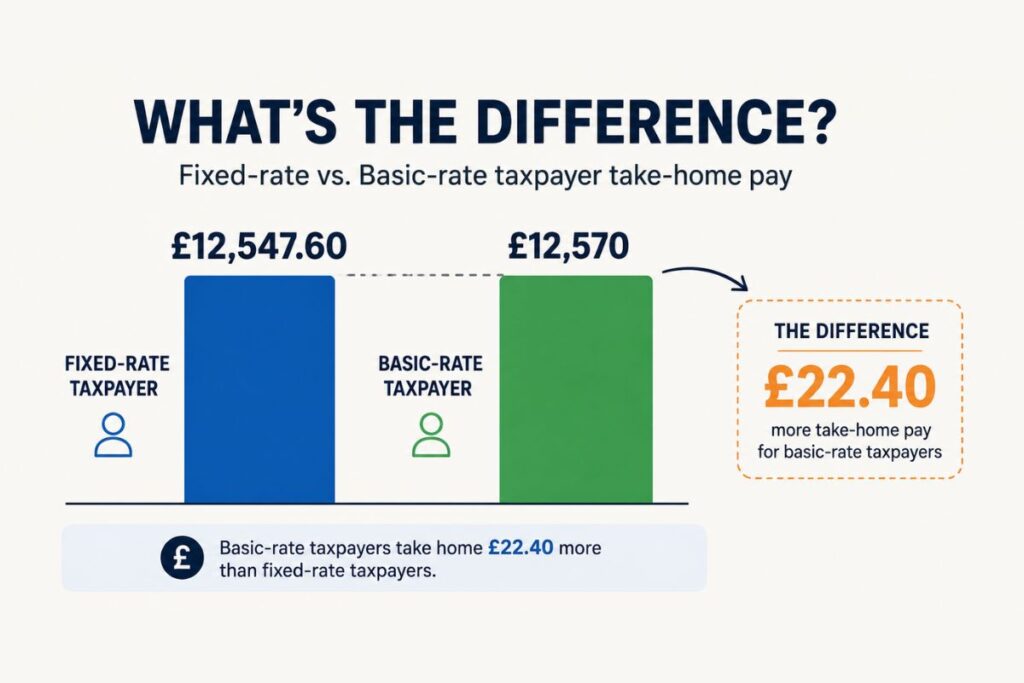
The full new State Pension is £241.30 a week in 2026/27, or £12,547.60 a year. The income tax personal allowance is frozen at £12,570. That leaves £22.40 of tax-free headroom before any other income is taxed at 20%. Figures from the House of Commons Library and GOV UK, verified 11 August 2026. If the State Pension is your only income, you still pay no tax. Almost nobody’s is.
The two numbers
| 2026/27 | |
|---|---|
| Full new State Pension (weekly) | £241.30 |
| Full new State Pension (annual) | £12,547.60 |
| Income tax personal allowance | £12,570.00 |
| Headroom | £22.40 |
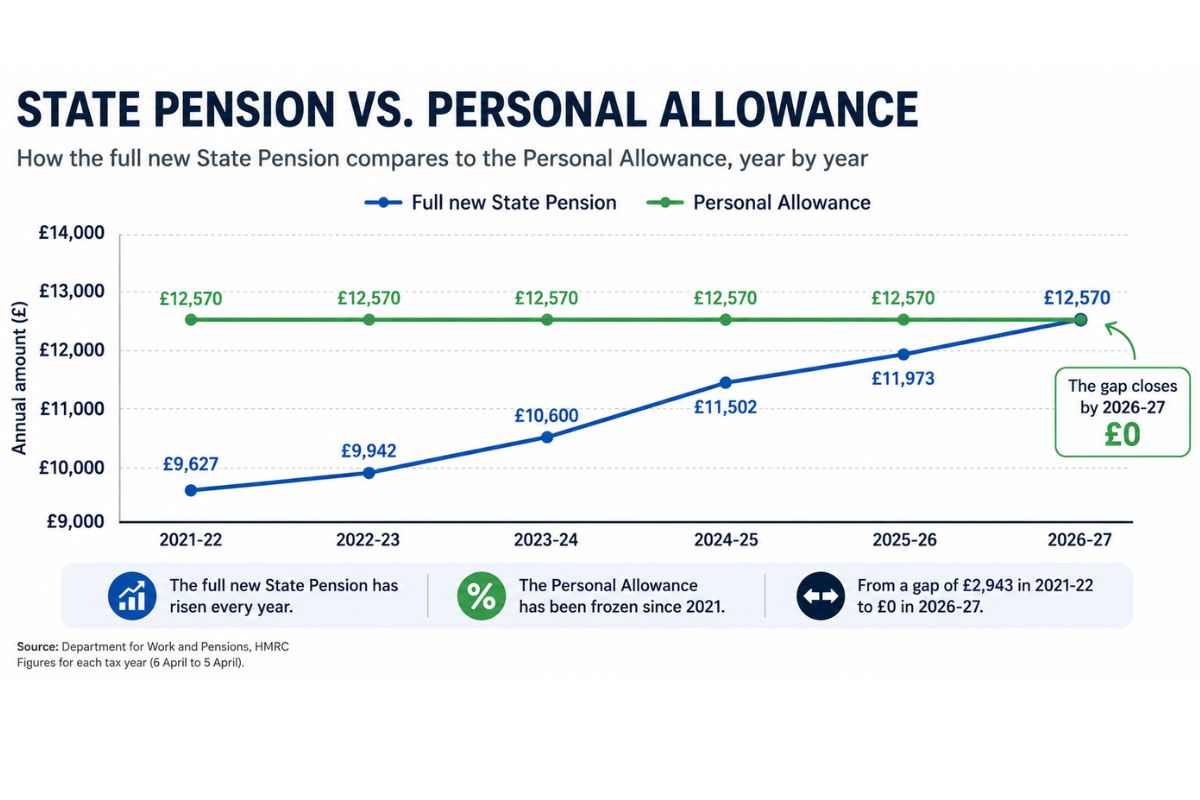
Sources: House of Commons Library, Benefits Uprating 2026/27; GOV UK income tax rates. The State Pension rose 4.8% in April 2026 under the triple lock, worth around £575 a year. The personal allowance did not move, because it has been frozen at £12,570 since April 2021. That combination is doing something specific, and it has a name.
What fiscal drag actually means
Fiscal drag is what happens when incomes rise, and tax thresholds stand still. Nobody votes for it. No Budget announces a tax rise. The rate stays at 20%. But every year the triple lock pushes the State Pension up, and the frozen allowance stays where it is, so the gap between them narrows and more income falls into the taxable band. For pensioners, the effect is sharp, because the triple lock raises the State Pension by the highest of earnings growth, inflation or 2.5%.
In 2026/27 earnings growth won, at 4.8%. Inflation-linked working-age benefits rose 3.8%. So the State Pension climbs faster than prices while the allowance climbs not at all. The Office for Budget Responsibility has forecast that hundreds of thousands more pensioners will be drawn into paying income tax as a direct result of the threshold freeze, rising to around a million by the end of the decade.
What it costs you: a worked example
Take someone receiving the full new State Pension plus a modest private pension of £3,000 a year.
| Amount | |
|---|---|
| Full new State Pension | £12,547.60 |
| Private pension | £3,000.00 |
| Total income | £15,547.60 |
| Less personal allowance | −£12,570.00 |
| Taxable income | £2,977.60 |
| Tax at 20% | £595.52 |
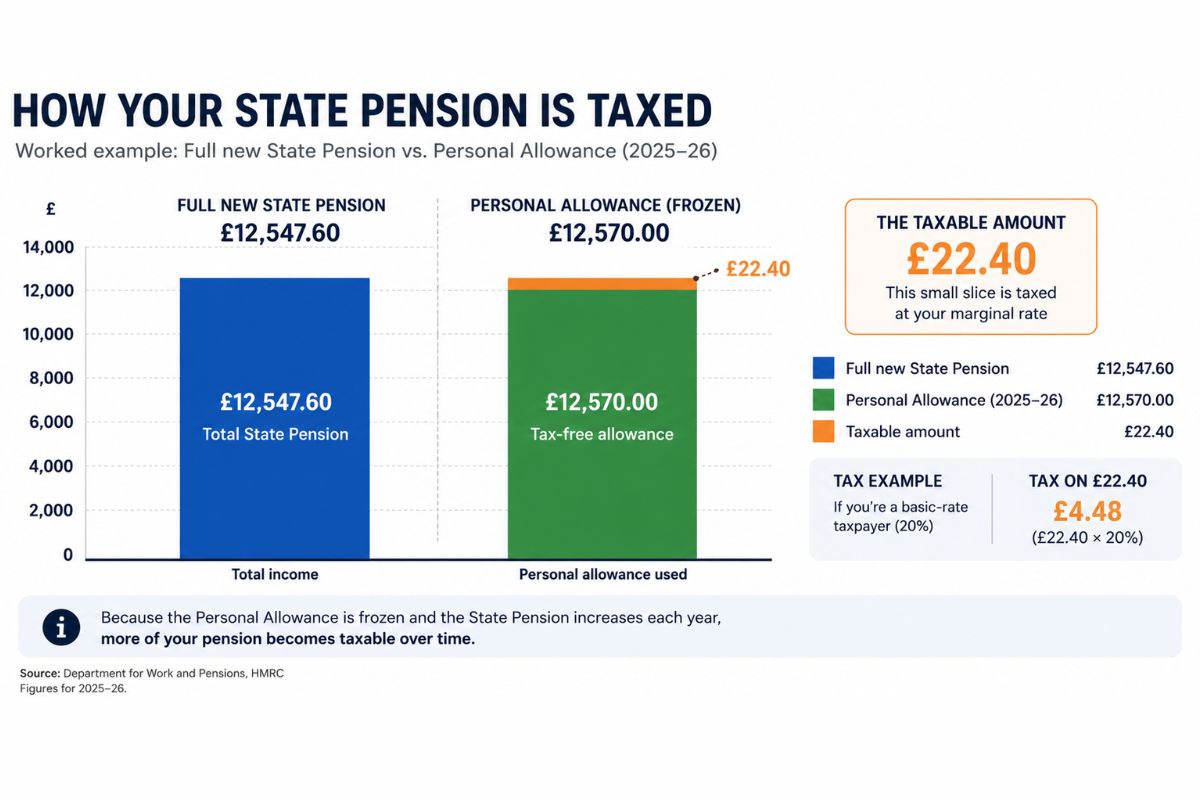
ESTIMATE. Assumes the full new State Pension, no other income, standard personal allowance, England, Wales or Northern Ireland rates. Scottish income tax rates differ. Of that £3,000 private pension, £22.40 is covered by the remaining allowance and the rest is taxed. The effective result is that almost every pound of the private pension is taxable. Five years ago, with the same allowance and a lower State Pension, more of that private pension would have been sheltered. Nothing about the person’s circumstances changed. The thresholds did not move.
How the State Pension is taxed
This confuses people, so it is worth being precise.
The State Pension is taxable income. It counts towards your personal allowance like any other income.
No tax is deducted from it. The DWP pays it gross. There is no PAYE on the State Pension itself.
HMRC collects any tax owed elsewhere. It does this by adjusting the tax code on your other income, usually a workplace or private pension. That is why your private pension can have a tax code that looks wrong. It is carrying the tax due on your State Pension as well as its own.
If you have no other PAYE income, HMRC may use Simple Assessment, sending a calculation and a bill rather than requiring a tax return. The government has said HMRC will put arrangements in place so that pensioners whose only income is the State Pension are not required to file a Simple Assessment return if their payment eventually exceeds the personal allowance.
VERIFY — confirm the current status of this commitment at review.
What happens when the State Pension passes £12,570
On current settings, this is arithmetic rather than speculation. The State Pension rises annually under the triple lock. The allowance is frozen. At some point the first overtakes the second. When that happens, someone whose only income is the State Pension would in principle have taxable income for the first time. The amounts would be small at first, a few pounds of tax on a few pounds of excess.
Two things could change the outcome. The freeze could end, or the allowance could rise. Or the triple lock could be altered, as it was suspended once, in 2022/23. The mechanism is what matters. A frozen threshold and an uprated payment converge, and they converge whether or not anyone decides they should.
What if you receive less than the full State Pension?
Not everyone receives the full new State Pension of £241.30 a week. The amount depends mainly on your National Insurance record, so some pensioners will have considerably more than £22.40 of room within the £12,570 Personal Allowance. Others may have additional income from a private pension, earnings, savings or other taxable sources, which can use up that allowance.
This means the £22.40 figure applies specifically to someone receiving the full new State Pension and having no other taxable income. GOV.UK confirms that the State Pension is added to other taxable income when HMRC works out whether tax is due.
What you can and cannot do about it
The options are limited, which is part of why this frustrates people.
Check your tax code. Errors are common where a State Pension is being collected through another pension’s code. Your code is on your payslip or pension statement, and you can check it in your personal tax account on GOV UK.
Marriage Allowance. If one partner earns under the personal allowance and the other is a basic-rate taxpayer, up to 10% of the allowance can be transferred. It can be backdated up to four tax years.
Check Pension Credit. Around £24 billion in benefits goes unclaimed annually according to Policy in Practice, and Pension Credit is among the most under-claimed. It also unlocks other support.
Consider the timing of private pension withdrawals, if you have flexibility. Drawing income across tax years rather than in one lump can matter.
Get regulated advice for anything involving your private pension. Pension Wise offers free government-backed guidance from age 50. This article explains how the tax works. It is information, not financial advice, and does not recommend any product, provider or course of action. Figures correct as at 11 August 2026.
Frequently asked questions
Is the State Pension taxable?
Yes. It counts as taxable income, though no tax is deducted from the payment itself. HMRC collects any tax due by adjusting the code on your other income.
How much is the full new State Pension in 2026/27?
£241.30 a week, or £12,547.60 a year. The full basic State Pension is £184.90 a week.
What is the personal allowance in 2026/27?
£12,570. It has been frozen at that level since April 2021.
Will I pay tax if the State Pension is my only income?
Not in 2026/27. The full new State Pension is £22.40 below the allowance.
Why has my tax code changed?
If you receive both a State Pension and a private or workplace pension, HMRC usually collects the tax due on the State Pension by reducing the tax code applied to the other one.
What is fiscal drag?
Incomes rise while tax thresholds stay frozen, so more income becomes taxable without any tax rate changing.
What is the triple lock?
The State Pension rises each year by the highest of average earnings growth, CPI inflation or 2.5%. In 2026/27 earnings growth won out at 4.8%.
How we checked these figures
State Pension rates and the 2026/27 uprating come from the House of Commons Library’s Benefits Uprating 2026/27 briefing, which sets out the confirmed rates. The personal allowance and income tax rates come from GOV UK. The forecast of additional pensioner taxpayers comes from the Office for Budget Responsibility. The worked example is our own calculation and is labelled as an estimate. It uses England, Wales and Northern Ireland rates; Scottish income tax bands differ.
Sources & References
- House of Commons Library, Benefits Uprating 2026/27 (CBP-10403)
- GOV UK income tax rates and personal allowances
- Office for Budget Responsibility forecasts on pensioner taxpayers
- GOV UK State Pension guidance


Leave a Reply