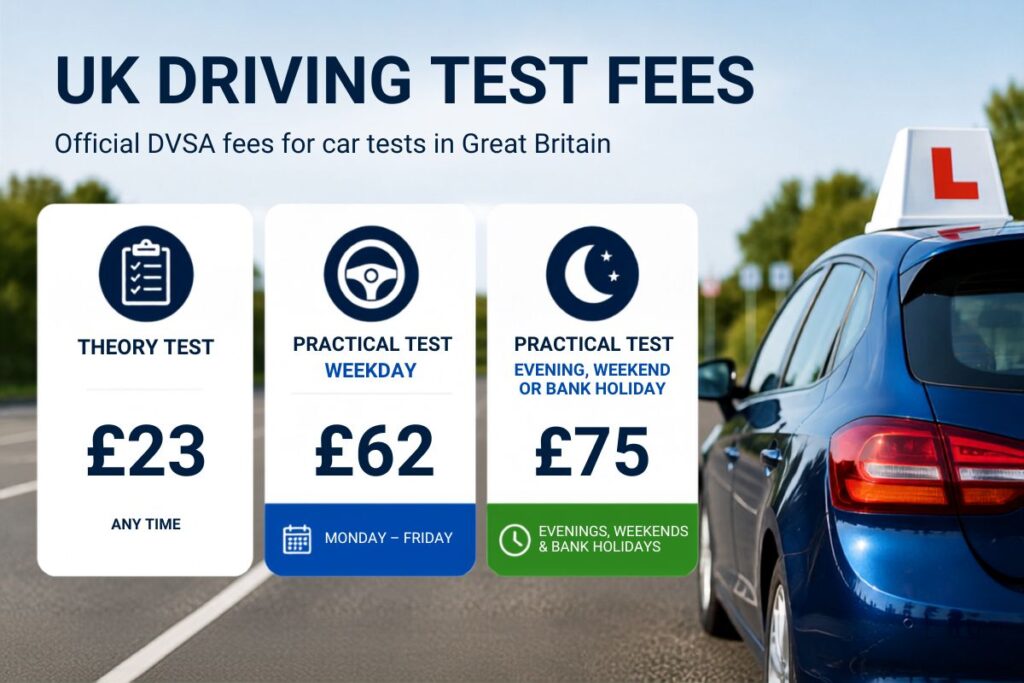
A car theory test costs £23, and a car practical driving test costs £62 on a weekday, or £75 for an evening, weekend or bank holiday slot. In Northern Ireland, the practical costs more, at £65 on a weekday and £95 on evenings and weekends. Fees from GOV UK and nidirect, verified 11 August 2026.
Those are the fees the government charges. They are not what learning to drive costs, which is a different and much larger number.
Here is every official fee, what the whole process costs once lessons are counted, and the parts of the bill people forget until they arrive.
Car Test Fees at a Glance
| Test | Weekday | Evening, weekend or bank holiday |
|---|---|---|
| Theory test | £23 | £23 |
| Practical driving test | £62 | £75 |
| Extended test (after disqualification) | £124 | £150 |
Source: GOV.UK driving test costs. Great Britain fees. Verified 11 August 2026.
The theory fee does not change with the time slot. Only the practical carries a premium, and the £13 difference is the sole variation in the official car fee.
Northern Ireland pays more, and Nobody Mentions it
Driving tests in Northern Ireland are run by the Driver and Vehicle Agency rather than the DVSA, and the fees are set separately.
| Test | Great Britain | Northern Ireland | Difference |
|---|---|---|---|
| Car theory | £23 | £23 | — |
| Car practical, weekday | £62 | £65 | +£3 |
| Car practical, evening or weekend | £75 | £95 | +£20 |
| Motorcycle practical | £75 (module 2) | £80 | +£5 |
| Lorry and bus practical | £115 | £87 | −£28 |
Sources: GOV.UK and nidirect. Verified 11 August 2026.
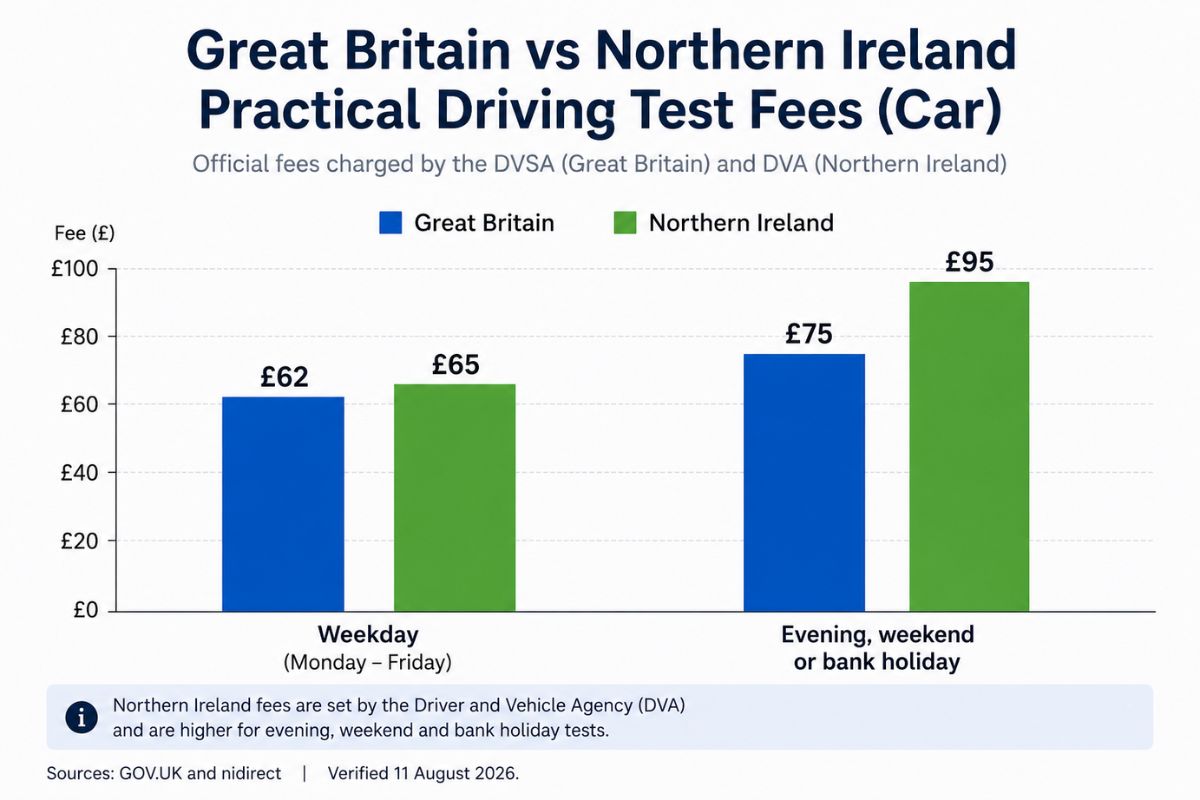
A learner in Belfast who can only sit a test at the weekend pays £95. The same test at the same time in Birmingham costs £75. Over a theory test and two practical attempts, that gap alone reaches £40.
Northern Ireland also charges separately for a motorcycle manoeuvres test at £45 weekday, which has no direct Great Britain equivalent, and its taxi driver theory test costs £34 against a car theory of £23.
Every other DVSA fee
Motorcycle and moped (Great Britain)
| Test | Weekday | Evening or weekend |
|---|---|---|
| Theory test | £23 | £23 |
| Module 1 (off-road) | £15.50 | £15.50 |
| Module 2 (on-road) | £75 | £88.50 |
| Extended test for disqualified riders | £150 | £177 |
Compulsory basic training is not a DVSA test. Training schools set their own CBT prices, so it does not appear in the government fee table at all.
Lorry, minibus, bus and coach (Driver CPC)
| Part | Weekday | Evening or weekend |
|---|---|---|
| Part 1a: theory, multiple choice | £26 | £26 |
| Part 1b: theory, hazard perception | £11 | £11 |
| Part 2: case studies | £23 | £23 |
| Part 3a: off-road exercises | £40 | £40 |
| Part 3b: on-road driving | £115 | £141 |
| Part 4: practical demonstration | £55 | £63 |
Part 3a can cost up to £40 if you take it with an approved test provider rather than with the DVSA.
Tractors and specialist vehicles cost £62 on a weekday and £75 evenings and weekends, the same as a car.
What Learning to Drive Costs Actually
The government fees are the small part. Here is the realistic picture for a car learner in Great Britain.
| Item | Typical cost | Source type |
|---|---|---|
| Provisional licence (online) | £34 | DVLA published fee |
| Theory test | £23 | GOV.UK, fixed |
| Practical test, weekday | £62 | GOV.UK, fixed |
| Official fees subtotal | £119 | Fixed |
| Driving lessons | £1,350 to £2,250 | Market estimate |
| Realistic total | £1,470 to £2,370 |
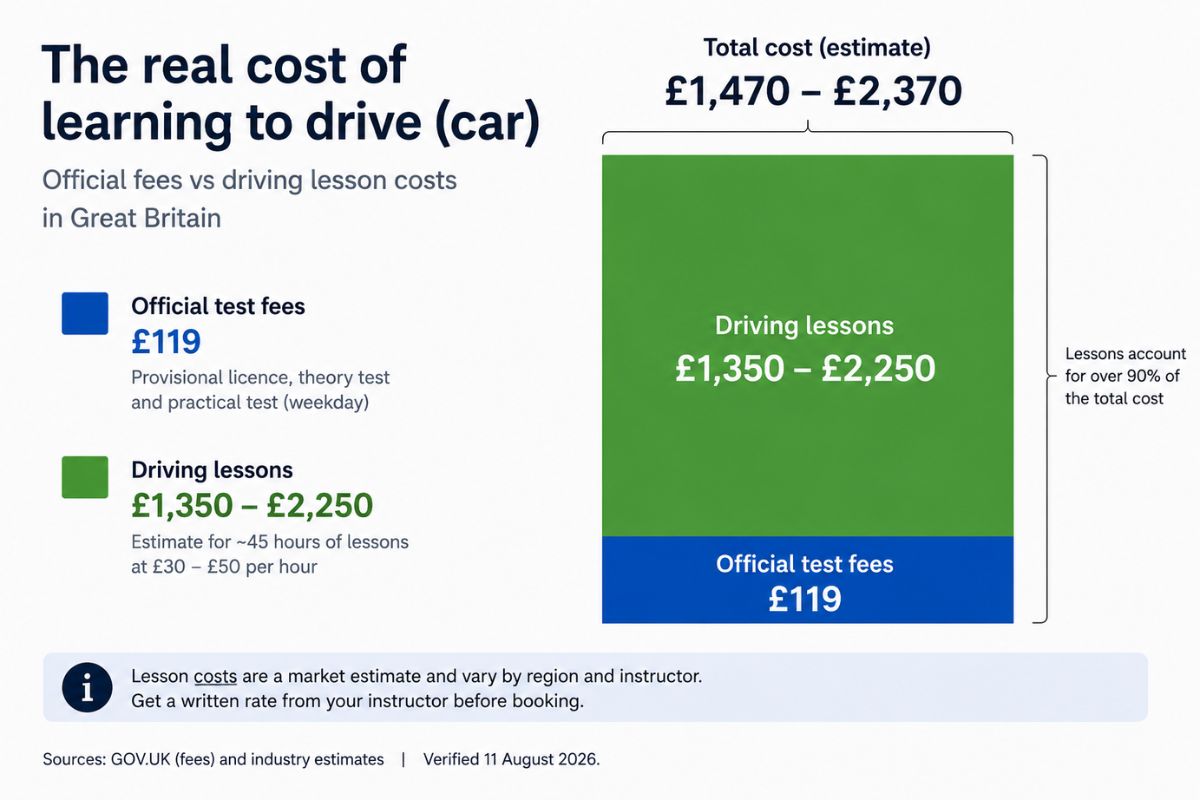
ESTIMATE — the lesson figure is a market range, not a published fee. It assumes roughly 45 hours of professional instruction at £30 to £50 an hour. Rates vary by region and by instructor; automatic lessons usually carry a premium over manual, and no national fixed rate exists. Get a written rate from your instructor before booking a block.
Lessons are the item that decides your total. The government fees are under 10% of the bill.
What Failing Costs
A retest is charged at the full fee. There is no reduced rate for a second attempt.
Failing the practical once and rebooking a weekday slot costs £62, plus whatever additional lessons you take before trying again. At £40 an hour, five more lessons add £200, giving a realistic £262 for one failed attempt.
Failing the theory costs £23 to rebook.
There is a second cost that catches people out. A theory test pass is valid for two years from the date you sit it, not from the date you book. If your certificate expires before you pass the practical, you sit the theory again and pay again, regardless of how well you did the first time.
The Fees have Not Risen for Years
This is the part that surprises people who assume everything government-charged goes up.
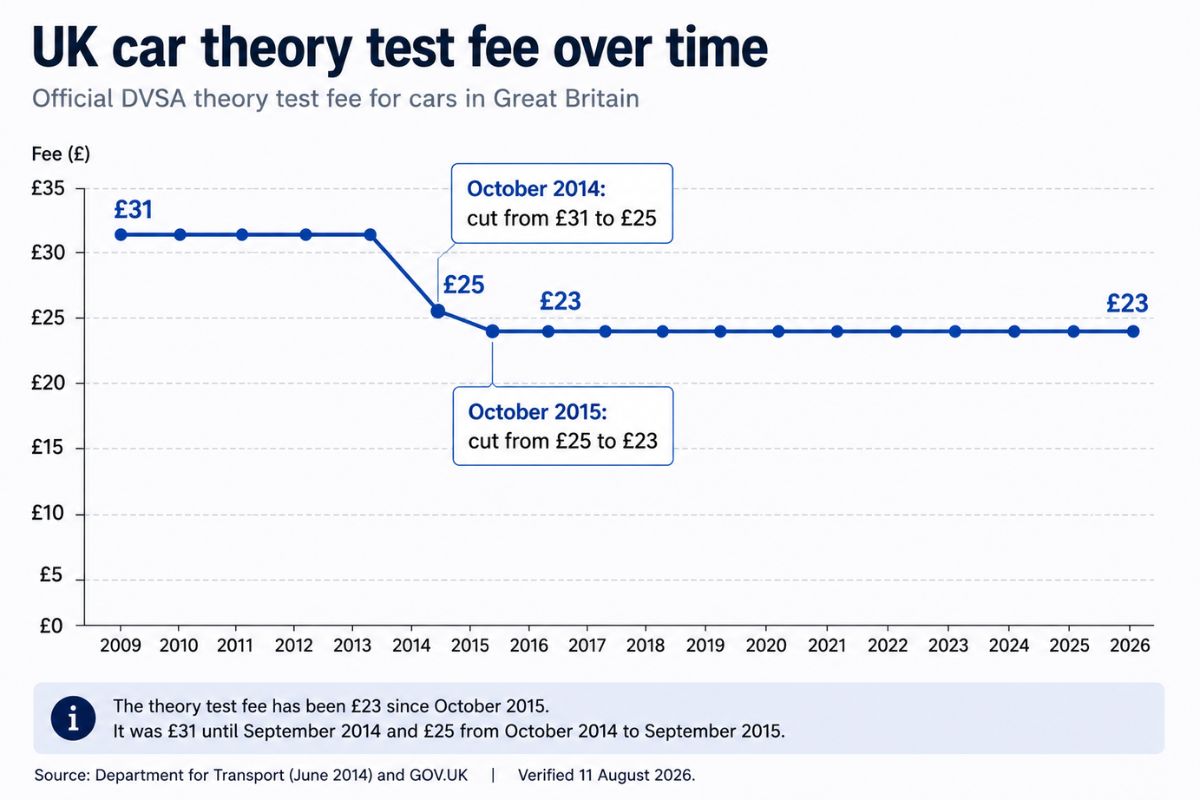
The weekday car practical fee has been £62 since 2009. The theory fee has been cut twice: from £31 to £25 in October 2014, then to £23 in October 2015.
Because inflation has run every year since, both fees have fallen substantially in real terms. The £62 practical test buys the DVSA meaningfully less examiner time than it did when the fee was set.
DVSA fees are set under road traffic regulations, and any change requires a statutory instrument laid before Parliament, which is one reason the headline car fees have stayed still for so long. It also means a rise, when it comes, will be announced rather than sudden.
How to Avoid Paying more than the Official Fee
Book only on GOV UK. The DVSA has warned publicly that copycat websites charge for booking a test you can book yourself, adding up to £30 on top of the fee, and sometimes selling a “pass protection” product that few customers ever qualify to use. These sites do not let you pick an actual appointment and do not give instant confirmation.
Book a weekday slot. A weekday practical is £62 against £75 evenings and weekends. Booking two attempts at weekday times rather than weekend ones saves £26.
Do not book before you are ready. A £62 saving on a well-timed test is worth less than the £262 an early failure costs.
Frequently Asked Questions
How much is the theory test in 2026?
£23 for cars and motorcycles, whatever time you sit it. Lorry and bus multiple-choice is £26, and hazard perception is £11.
How much is the practical driving test?
£62 on a weekday in Great Britain, or £75 for an evening, weekend or bank holiday slot. In Northern Ireland it is £65 and £95.
Why do evening and weekend tests cost more?
The premium pays for examiner availability outside standard hours. The test itself is identical.
Do you pay again if you fail?
Yes. Retests are charged at the full fee with no discount.
How long is a theory test pass valid?
Two years from the date you sit it. If it expires before you pass the practical, you take and pay for the theory again.
Is a manual test more expensive than an automatic one?
No. The fee is identical for both.
How much does it cost to learn to drive in total?
Official fees come to £119. Adding roughly 45 hours of lessons gives a realistic total of £1,470 to £2,370 for a first-time passer, with lessons accounting for the overwhelming majority.
How we checked these figures
Every DVSA fee on this page comes from the GOV.UK driving test costs page, the government’s published fee table for Great Britain. Northern Ireland fees come from nidirect, published by the Driver and Vehicle Agency. The historical theory test reductions come from the Department for Transport announcement of June 2014. The warning about copycat booking sites is the DVSA’s own.
Lesson costs are labelled as an estimate because no official figure exists. They reflect a market range and will vary by region and instructor.
Sources and References:
- GOV.UK driving test costs (full fee tables)
- nidirect — DVA driving test fees (Northern Ireland)
- GOV.UK driving and motorcycle tests hub
- DVSA news: learner drivers warned about extra charges
- GOV.UK news: theory test fee reductions 2014–2015
This article explains published costs. It is information, not financial advice, and does not recommend any provider or product.

Leave a Reply