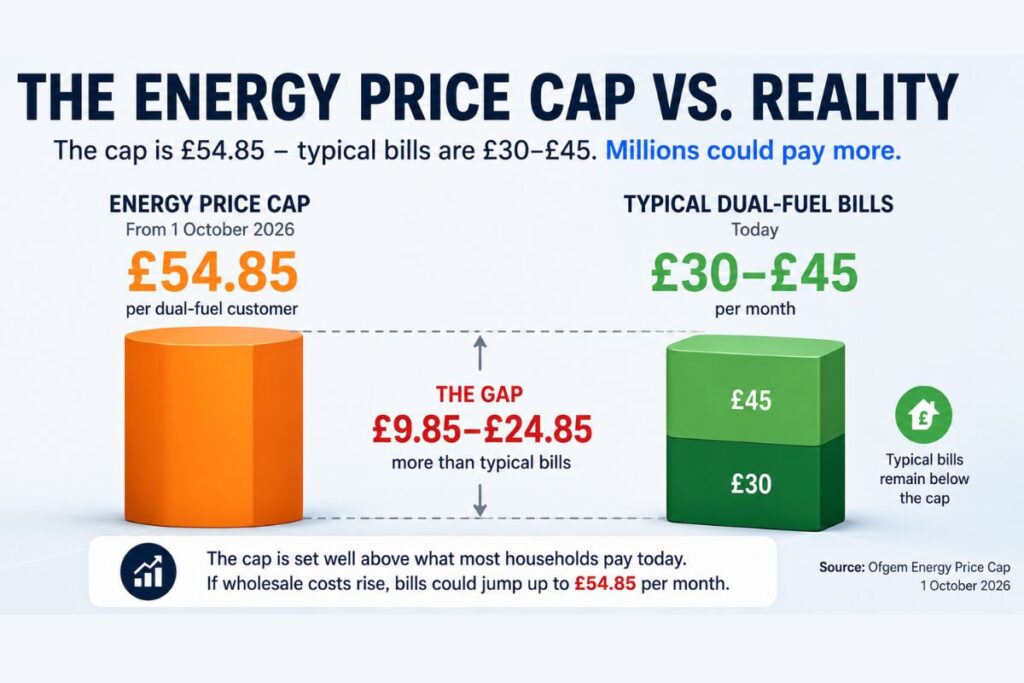
The most a garage can legally charge for a car MOT is £54.85, the DVSA maximum. A standard motorcycle MOT is capped at £29.65. Most garages charge well below the cap, typically £30 to £45. There is no VAT on the test fee. Caps from GOV.UK, verified 11 August 2026.
The cap is a ceiling, not a price. What you actually pay depends on where you go, and the spread is wide.
The DVSA maximum fees
| Vehicle class | Covers | Maximum fee |
|---|---|---|
| Class 1 and 2 | Motorcycles | £29.65 |
| Class 3 | Light three-wheelers | £37.80 |
| Class 4 | Cars, motor caravans, light vans up to 3,000kg | £54.85 |
| Class 4a | Class 4 with seatbelt installation check | £64.00 |
| Class 5 | Minibuses, 13+ seats | £59.55 to £80.65 |
| Class 5a | Class 5 with seatbelt installation check | £80.50 to £124.50 |
| Class 7 | Large vans, 3,000 to 3,500kg | £58.60 |
Class 4 and motorcycle caps: GOV.UK. Other classes: DVSA published fee schedule. Verified 11 August 2026.
Class 4 covers the overwhelming majority of cars on UK roads. Electric and hybrid vehicles sit in the same classes as petrol and diesel, so the fee is identical.
What you will actually pay
ESTIMATE. Most independent garages charge between £30 and £45. National chains run promotional pricing that can fall lower. Council-run test centres are often at the cheaper end.
There is no minimum. The DVSA sets a ceiling and nothing else, so a garage can charge whatever it likes below £54.85.
The reason prices sit so far under the cap is straightforward commercial behaviour. The MOT gets your car onto the ramp. The money is in the repair work found during the inspection. That is not a scam, and it is not hidden, but it is worth knowing two things: a cheap test does not oblige you to have repairs done there, and a failure is recorded on the DVSA database immediately, so any other garage can quote against the recorded defects.
Can a garage charge more than £54.85 for an MOT?
For a standard car MOT in England, Scotland and Wales, £54.85 is the statutory maximum for the test itself. A garage can charge less, but it cannot charge more than the permitted maximum for the relevant vehicle class. The DVSA also requires authorised test stations to display the current MOT fees and appeals poster so customers can see the applicable charges.
The important distinction is between the MOT test and additional work. A garage can quote separately for repairs, diagnostics or other services, and those costs are not included in the £54.85 MOT cap. You do not have to accept repair work simply because the garage carried out your MOT.
No VAT on the test fee
The MOT test fee is exempt from VAT. The price quoted is the price you pay.
Any repair work is a different matter and carries VAT at 20% on both parts and labour. When a garage quotes for repairs, check whether the figure includes VAT or whether it is being added afterwards.
If a garage adds VAT to the test fee itself, that is an overcharge.
What happens if your car fails
This is where most people pay more than they need to, because the retest rules are widely misunderstood. There are three outcomes, and they cost very different amounts.
Leave the car at the test station for repair. If the station repairs it and retests within 10 working days of the initial failure, only a partial retest is needed, and no fee may be charged. This is the cheapest route, and almost nobody uses it deliberately.
Take the car away and bring it back to the same station within 10 working days. Only a partial retest is needed, but a fee may be charged, up to half the full test fee. For a Class 4 car, that is a maximum of £27.43.
Anything else. Different station, or more than 10 working days, and you pay the full test fee again, up to £54.85.
Many garages waive the partial retest fee as goodwill. They are not required to, so ask before you assume.
A duplicate MOT certificate is capped at £10, though certificates can now be viewed and printed free through the GOV.UK service.
The price has been frozen since 2010
The DVSA fee caps came into force on 6 April 2010 and have not risen since.
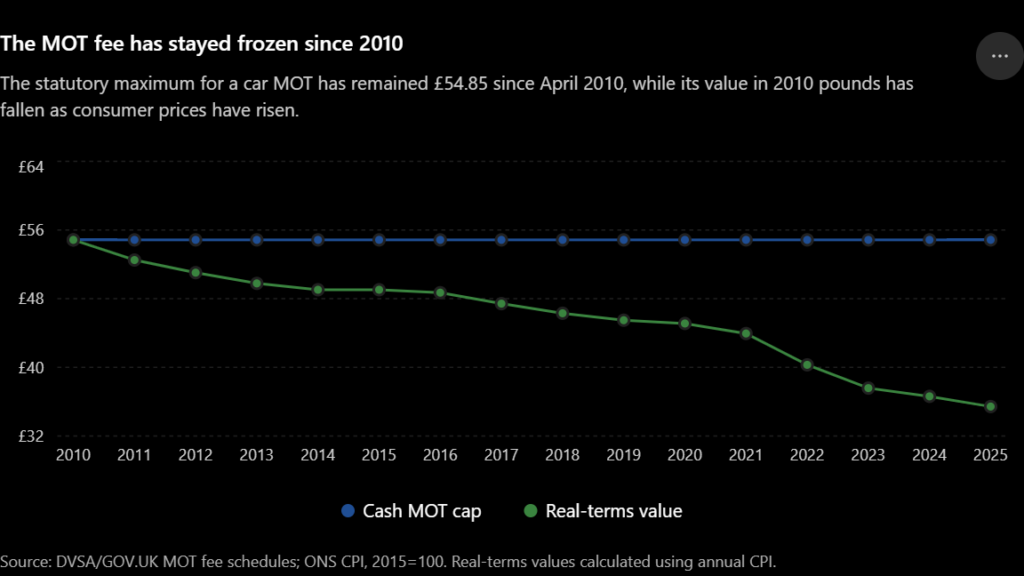
Sixteen years of inflation have done the rest. A garage charging the full £54.85 in 2026 receives substantially less in real terms than it did when the cap was set. That is the reason sub-£20 promotional MOTs, which were common a few years ago, have largely disappeared: the economics stopped working.
It also means the MOT is one of the few motoring costs that has fallen in real terms across the last decade and a half.
Northern Ireland works differently
MOTs in Northern Ireland are run by the Driver and Vehicle Agency rather than the DVSA, through government test centres rather than private garages.
VERIFY at review — reported as a fixed fee at 15 government-run centres. Confirm the current fee and centre count on nidirect before publication.
The practical difference for a driver is that there is no shopping around. The fee is the fee.
The other costs around an MOT
| Item | Typical cost | Note |
|---|---|---|
| Test fee, Class 4 car | Up to £54.85 | DVSA cap, no VAT |
| Partial retest, car away and returned | Up to £27.43 | Half the cap |
| Partial retest, car left at station | £0 | Within 10 working days |
| Duplicate certificate | Up to £10 | Free online |
| Diagnostic fee | £20 to £50 | ESTIMATE. Not regulated. |
| Repair labour | £60 to £140 per hour | ESTIMATE. Not regulated. Plus VAT. |
Only the first four are capped. Everything else is a commercial price set by the garage.
Frequently asked questions
How much is an MOT in 2026?
Up to £54.85 for a car and £29.65 for a standard motorcycle. Most garages charge less than the maximum.
Is there VAT on an MOT?
No. The test fee is VAT-exempt. Repairs carry VAT at 20%.
Do I pay again if my car fails?
Not always. If the car stays at the test station and is repaired and retested within 10 working days, the partial retest is free. If you take it away and bring it back within 10 working days, you may be charged up to half the test fee.
Do electric cars pay a different MOT fee?
No. Electric and hybrid vehicles fall into the same classes as petrol and diesel.
How much is a van MOT?
A light van up to 3,000kg is Class 4, capped at £54.85. A larger van between 3,000kg and 3,500kg is Class 7, capped at £58.60.
Why do garages charge less than the maximum?
The DVSA sets only a ceiling. Garages compete below it, because the test brings the car in and repair work is where the margin sits.
Has the MOT fee gone up?
No. The caps have been unchanged since 6 April 2010, which means the fee has fallen substantially in real terms.
How we checked these figures
The Class 4 and motorcycle caps and the VAT exemption come from GOV.UK’s Getting an MOT guidance. The other class fees and the retest rules come from the DVSA’s published MOT test fees and appeals poster and the MOT testing guide. The 6 April 2010 start date comes from the VOSA fee notice.
Typical garage prices, diagnostic fees and labour rates are labelled as estimates. They are market ranges, not published figures.
Sources and References
- GOV UK, Getting an MOT: MOT costs
- DVSA VT9A MOT test fees and appeals poster
- VOSA fee notice, fees applying from 6 April 2010
- GOV UK MOT testing guide, accounts and fees
This article explains published costs. It is information, not financial advice, and recommends no garage or provider.




Leave a Reply