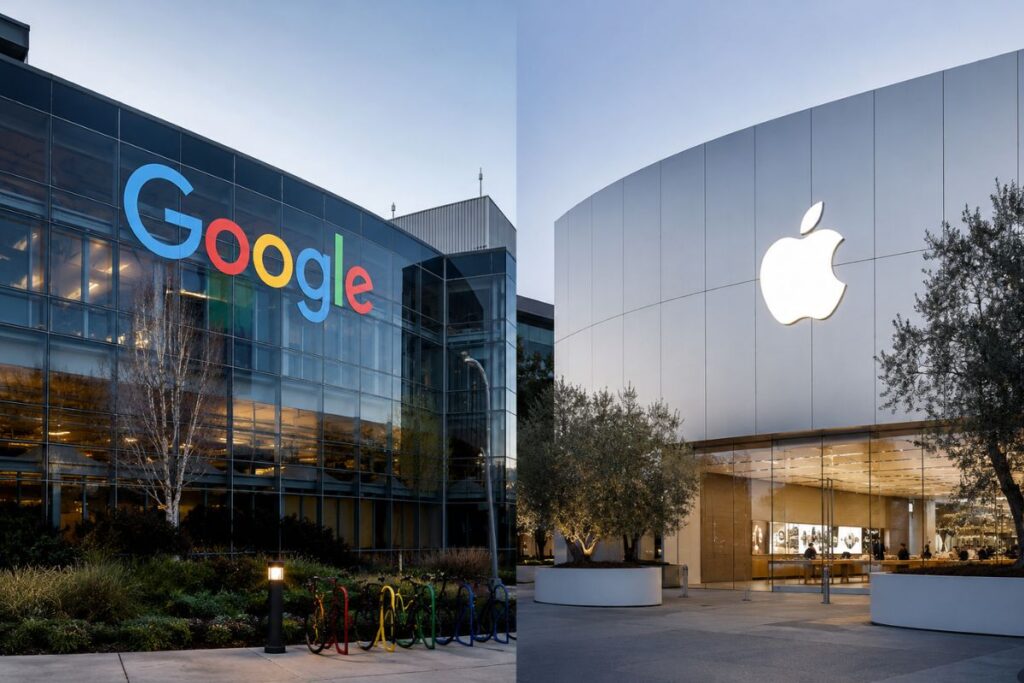
Google topped the 2026 Kantar BrandZ brand value ranking at $1.5 trillion, ending Apple’s four-year run at the top, while Apple reclaimed the title of world’s most valuable company by market cap on 27 July 2026, overtaking Nvidia at $4.95 trillion.
The comparison between most valuable brands and most valuable companies has rarely looked this different at the top. Brand value and company value sound like they should track together, and usually they do, roughly. This year has produced a genuinely striking split at the top. Google’s brand overtook Apple’s for the first time since 2018, driven by Gemini integration across its products. Meanwhile, the market capitalisation crown has swung repeatedly between Apple and Nvidia in recent weeks, driven by investor sentiment about AI infrastructure spending that has little to do with how consumers actually feel about either brand.
- Google topped the 2026 Kantar BrandZ ranking at $1.5 trillion brand value, ending Apple’s four consecutive years at number one
- Apple’s brand value sits at $1.4 trillion, Microsoft’s at $1.1 trillion, and Amazon’s at $1.0 trillion, the first time three brands have simultaneously broken the trillion-dollar threshold
- Apple reclaimed the title of world’s most valuable company on 27 July 2026, reaching $4.95 trillion and overtaking Nvidia’s $4.77 trillion
- Nvidia became the first company to cross a $5 trillion market cap in October 2025, and Apple briefly did the same in late July 2026
- The combined value of Kantar’s Global Top 100 brands hit a record $13.1 trillion in 2026, up 22% year on year
- Claude debuted in the Kantar BrandZ Global Top 100 for the first time this year, entering at number 27
Brand Value vs Market Capitalisation at a Glance
| Metric | Brand Value Ranking (Kantar BrandZ 2026) | Market Capitalisation (July 2026) |
|---|---|---|
| #1 | Google ($1.5T) | Apple ($4.95T) |
| #2 | Apple ($1.4T) | Nvidia ($4.77T) |
| #3 | Microsoft ($1.1T) | Microsoft |
| #4 | Amazon ($1.0T) | Amazon |
| Measures | Consumer perception + financial contribution of the brand | Company’s total stock market value |
Two Different Ways of Measuring Worth
Brand value and market capitalisation sound similar but measure genuinely different things. Market cap is mechanical: share price multiplied by outstanding shares, moving in real time based on earnings, growth expectations, and investor sentiment about a sector’s direction. Brand value, as Kantar calculates it, blends financial analysis with consumer perception, built this year on responses from 4.6 million people across more than 22,000 brands worldwide. It asks a different question: not what is this company worth on paper today, but how much of that worth comes from the brand itself, separate from its factories, patents, or cash reserves.
Understanding that distinction makes it easier to see why Google’s brand now ranks ahead of Apple’s, while Apple still leads by market capitalisation.
The Brand Ranking: Google’s Return to the Top
Google reclaimed the number one spot in Kantar’s 2026 BrandZ ranking with a brand value of $1.5 trillion, a 57% jump year on year that ended Apple’s four consecutive years at the top. Kantar attributed Google’s growth to the wider adoption of Gemini-powered experiences and expanding AI integration across its products, alongside continued data centre investment.
Apple held at number two with a $1.4 trillion brand value. Microsoft climbed to third at $1.1 trillion, and Amazon rounded out the top four at $1.0 trillion. For the first time in the ranking’s history, three brands broke the trillion-dollar threshold simultaneously alongside Apple. Nvidia ranked fifth with a brand value of $814.9 billion, highlighting how rapidly its brand has grown alongside its position in AI infrastructure.
ChatGPT recorded the highest year-on-year brand value increase in the ranking’s history among the top 100, up 285%, a jump Kantar noted was second only to BlackBerry’s 390% surge in 2008. Claude debuted in the Global Top 100 for the first time this year, entering at number 27 with a brand value just under $100 billion. Kantar’s head of BrandZ, Martin Guerrieri, said AI is accelerating growth across the ranking, and that standing out as meaningfully different has become more important for brands as AI increasingly shapes what content and products people encounter.
The Company Ranking: A Volatile Year
Market capitalisation at the top of global business has told a considerably choppier story this year than brand value has. Nvidia held the title of world’s most valuable company from June 2025 onward, having overtaken Microsoft, and became the first company in history to cross a $5 trillion market cap in October 2025.
Apple crossed $4 trillion for the first time that same October. On 27 July 2026, Apple overtook Nvidia outright, reaching a market cap of $4.95 trillion against Nvidia’s $4.77 trillion. The following day, Apple briefly crossed $5 trillion itself, becoming only the second company ever to do so. Apple’s shares are up around 22 to 24% for the year, the top performer among the so-called Magnificent Seven, while Nvidia has added only around 4 to 7%.
The shift reflects a broader rotation among technology investors, with many shifting focus away from GPU makers toward memory chip and data centre infrastructure companies as the next phase of AI buildout takes shape. HSBC upgraded Apple from Hold to Buy on 17 July 2026, raising its price target from $260 to $366. Analyst Nicolas Cote-Colisson pointed to Apple’s low capital expenditure, roughly 2.5% of estimated 2026 sales compared with around 39% for major cloud providers, alongside its 2.5 billion installed device base and an upcoming hardware pipeline including a foldable iPhone.
Why the Two Lists Don’t Match?
Comparing the two rankings side by side reveals a company’s different sources of worth. Nvidia’s market cap has been driven largely by investor conviction about AI infrastructure spending, a bet on future earnings rather than a direct reflection of consumer affection for the brand, which is one reason its brand value, while substantial at $814.9 billion, sits well below what its market capitalisation alone might suggest. Google’s brand value, by contrast, grew specifically because consumers are now interacting with the brand differently day to day, through Gemini-powered products, rather than because of a single earnings report or investor rotation.
Apple sits somewhere in between, a company whose market cap and brand value have both remained near the top for years, reflecting a rarer alignment between investor confidence and consumer loyalty. Most companies at this scale don’t manage that combination.
What the 2026 Rankings Tell Us
The biggest takeaway from 2026 is that brand power and investor value are no longer moving in perfect step. Google can have the world’s most valuable brand while Apple holds the market-cap crown, showing that consumer trust and stock-market expectations measure two very different kinds of strength.
AI is also becoming a major force behind both sides of the rankings. Google’s rise has been linked to Gemini and wider AI integration, while Nvidia’s enormous market value reflects investor expectations around AI infrastructure.
FAQ
What is the difference between brand value and market capitalisation?
Market capitalisation is share price multiplied by outstanding shares, a purely financial calculation. Brand value, as measured by Kantar BrandZ, combines financial analysis with consumer perception data to estimate how much of a company’s worth comes specifically from its brand.
Which company has the most valuable brand in 2026?
Google, with a Kantar BrandZ brand value of $1.5 trillion, ending Apple’s four consecutive years at the top of the ranking.
Which company is the most valuable by market cap in 2026?
Apple, reclaiming the title on 27 July 2026 with a market capitalisation of $4.95 trillion, overtaking Nvidia.
Why did Nvidia lose the top spot?
Investor sentiment shifted away from AI chip makers toward memory chip and data centre infrastructure companies, while Apple’s lower capital spending model and upcoming AI-driven hardware pipeline drew renewed investor confidence.
Has any company topped both the brand value and market cap rankings at the same time?
Apple has come closest in recent years, holding the top brand value spot for four consecutive years through 2025 while also frequently leading or closely trailing the market cap rankings. In 2026, Google took the brand crown while Apple and Nvidia continued to trade the market cap title.
Sources and References
- Kantar – The Kantar BrandZ Most Valuable Global Brands 2026
- CNBC – Apple Ends Day as World’s Most Valuable Company, Passing Nvidia
- Forbes – Apple Becomes World’s Largest Company, Surpassing Nvidia
- American Bazaar – Apple Briefly Becomes Second Company Ever to Reach $5 Trillion Market Value
- Bloomberg – Apple Upgraded to Buy by HSBC on Agentic AI, Hardware Pipeline
- Yahoo Finance – Apple Market Cap Passes Nvidia for Biggest Company in the World
Disclaimer: This article is for informational purposes only and is based on publicly available information at the time of publication. Brand values, market capitalisations, and rankings may change over time. Readers should verify the latest information from official sources before making any financial or business decisions.




Leave a Reply