Quick Answer: Weak winter sunlight, indoor routines, darker skin, ageing, certain health conditions and a diet that’s naturally short on vitamin D all stack up together — which is why so many people in the UK end up running low without ever realising it.
You probably know someone who’s been told their vitamin D is low. Maybe it’s you. It comes up a lot, and there’s a reason for that. Unlike a cold or a sprained ankle, this one doesn’t make itself known straight away. It just sits there, building up over months, sometimes years, while quietly doing more than most people give it credit for — helping bones absorb what they need, keeping muscles working the way they should, backing up the immune system, and even having some pull over mood. So when levels fall and stay low, nothing dramatic happens overnight. You just feel a bit off. A bit tired. And it’s far too easy to chalk that up to work, bad sleep, or just getting older, instead of what’s actually going on underneath it.
- The Sun is not high enough in the sky during most of the year for the skin to generate vitamin D regardless of the number of hours spent outdoors.
- The sedentary indoor lifestyle of today’s society means that less skin is exposed to sunlight compared to decades ago.
- Foods are not naturally rich in vitamin D; thus, a healthy diet alone does not solve the deficiency problem.
- Individuals who are older in age, those who have a dark skin tone, as well as people with digestive and/or kidney problems, have an elevated risk.
- It is due to the non-specific nature of symptoms that people may not be aware that they are deficient for several years.
The Sunlight Problem: Britain’s Biggest Obstacle
Sunlight triggers vitamin D production almost like flipping a switch. UVB rays hit bare skin and set off a chemical reaction that turns a compound just under the surface into usable vitamin D3. The catch is that this only works properly when the sun is strong and high enough in the sky — and for a good chunk of the year in the UK, it just isn’t.

A few reasons the British climate makes this so tricky:
- From roughly October to early March, the sun doesn’t climb high enough for the reaction to happen at all, no matter how much time is spent outside.
- Overcast skies are the norm rather than the exception for large stretches of the year, so even a “sunny” day might not deliver much.
- Latitude alone puts the UK at a disadvantage compared with countries closer to the equator.
It’s exactly why UK health guidance suggests everyone think about a daily vitamin D supplement through autumn and winter, with some people advised to keep it up all year.
Also Read – Natural Sources Of Proteins That Actually Fit Real Life
Modern Lifestyles Keep Us Out of the Sun
Even when the sun is strong, day-to-day life gets in the way. A few culprits worth naming:
- Most adults spend the bulk of daylight hours indoors — at a desk, in a car, in a classroom — with only brief windows of direct light exposure.
- Sunscreen blocks UVB along with the UV rays it’s meant to guard against, which is necessary for skin protection but does reduce vitamin D production.
- Clothing that covers most of the body, for whatever reason, cuts down the surface area available even further.
- Working from home, more screen time, and generally more indoor leisure have all added to the trend.
Put it all together and people today simply get far less sun exposure than previous generations did, even living under the same sky.
Diet Alone Rarely Bridges the Gap
Vitamin D is unusual in that hardly any food naturally contains much of it. The short list of decent sources:
- Oily fish — salmon, mackerel, sardines — by far the best natural options
- Egg yolks, in smaller amounts
- Beef liver, also in smaller amounts
- Fortified foods — some cereals, spreads, and plant milks have it added
| Food Source | Roughly How Much Vitamin D | Worth Knowing |
| Salmon, cooked (100g) | 500–1000 IU | One of the best natural sources by far |
| Mackerel, cooked (100g) | 350–400 IU | Also a solid source of omega-3 |
| Egg yolk (1 large) | ~40 IU | Small amount, but adds up alongside other sources |
| Beef liver (100g) | ~50 IU | Also brings iron and vitamin A |
| Fortified breakfast cereal (1 bowl) | 40–100 IU | Varies a lot by brand — check the label |
| Fortified plant milk (250ml) | ~100 IU | Handy option for anyone avoiding dairy |
| UV-exposed mushrooms (100g) | ~400 IU | One of the only plant-based sources going |
Because fortification levels swing so much from brand to brand, it’s genuinely worth checking the label rather than assuming any one food has you covered. For most people who don’t eat much oily fish, diet on its own simply isn’t going to bridge what sunlight isn’t providing. Vegans and vegetarians have it even harder here, since most natural sources come from animals — though lichen-derived D3 supplements have made things easier in recent years.
Also Read – Why Tap Water Vs Bottled Water Debate Is Changing In 2026
How Doctors Read a Vitamin D Blood Test
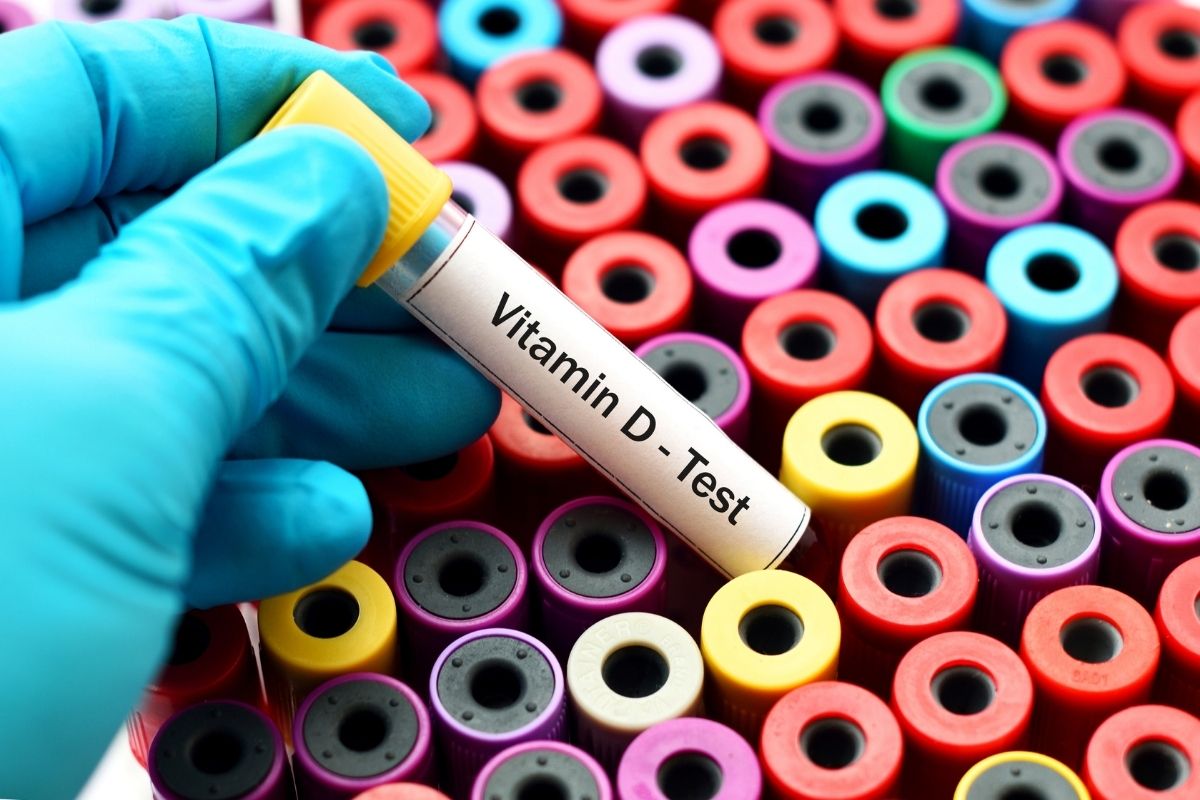
When a GP does check vitamin D, it’s usually through a blood test for 25-hydroxyvitamin D, shortened to 25(OH)D. This is the most reliable marker of how much is actually circulating and available for the body to use. It isn’t routinely tested in everyone — it tends to come up when someone has symptoms, sits in a higher-risk group, or has a condition known to interfere with absorption.
| Blood Level (nmol/L) | What It’s Called | Roughly What It Means |
| Below 25 | Deficient | Too low — a doctor will usually start treatment-dose supplements |
| 25–50 | Insufficient | On the low side — a maintenance dose is often suggested |
| 50–125 | Sufficient | Considered adequate for most people |
| Above 125 | Potentially too high | Worth reviewing, especially with heavy, unsupervised supplement use |
These cut-offs can shift slightly depending on the lab or the guideline being followed, so a doctor weighs the number alongside symptoms and history rather than treating it as a hard rule on its own.
Who Is Most at Risk
A few groups are considerably more likely to end up deficient:
- Older adults — ageing skin doesn’t produce vitamin D as efficiently, and older people often spend more time indoors anyway.
- People with darker skin — higher melanin content means the skin needs more sun exposure to make the same amount.
- Anyone who covers most of their skin outdoors — less exposed surface area means less production, regardless of the reason for covering up.
- People with digestive conditions — coeliac disease, Crohn’s disease, and similar conditions can interfere with absorption.
- People carrying excess weight — vitamin D can get sequestered in fat tissue, leaving less of it circulating.
- Those with kidney or liver disease — both organs are needed to convert vitamin D into a usable form.
- Breastfed babies — breast milk alone doesn’t provide much, so a supplement is often recommended for exclusively breastfed infants.
Why Symptoms Often Go Unnoticed
Here’s the thing that makes this deficiency so sneaky: it very often causes no noticeable symptoms whatsoever, particularly early on. When something does show up, it tends to be one of these vague, easy-to-dismiss signs:
- General tiredness or low energy
- Aches or muscle weakness
- Bone pain
- A flat or low mood
Because all of that overlaps with so many everyday complaints — stress, poor sleep, just “getting older” — it can go unchecked for years unless someone specifically asks for a blood test.
Left alone for long enough, it can eventually:
- Weaken bones over time
- Raise the risk of fractures
- Lead to osteomalacia (soft bones) in adults
- Lead to rickets in children, in rarer cases
None of that is inevitable, though. It’s avoidable, which is really the whole point of paying attention to it early.
Also Read – The Brave New World of Thai Tea
What Can Be Done About It
The reassuring part is that fixing this is usually simple once it’s spotted. The general approach doctors take:
- Confirm with a blood test rather than guessing from symptoms
- Start a daily vitamin D3 supplement — the most dependable fix, since it doesn’t depend on the weather or finding time outside
- Add more oily fish and fortified food where practical
- Get sensible, unprotected sun exposure when the season allows it, as a support rather than a replacement for supplementation
| Age or Life Stage | General Daily Guideline |
| Infants up to 12 months | ~400 IU (10 mcg) |
| Children and adults, 1–70 years | ~600 IU (15 mcg) |
| Adults over 70 | ~800 IU (20 mcg) |
| Pregnant or breastfeeding women | ~600 IU (15 mcg) |
Someone who’s already deficient might be put on a higher, short-term dose before dropping to a standard maintenance level. That’s a decision for a GP to make, not something to work out alone. A couple of practical notes:
- Vitamin D3 (cholecalciferol) is usually preferred over D2 (ergocalciferol) because the body absorbs and holds onto it better, and it’s available over the counter.
- Taking it with a meal that has some fat in it helps absorption, since it’s a fat-soluble vitamin.
- Going well above the recommended dose without medical advice isn’t a good idea — very high, sustained intake can occasionally push calcium levels too high.
Anyone unsure about their own levels, especially if they fall into one of the higher-risk groups above, is best off asking a GP or pharmacist rather than guessing.
Conclusion
There’s no single reason vitamin D deficiency has become so common — it’s more that a handful of ordinary, everyday factors happen to line up against it at once. Weak winter sun limits natural production for months at a time, indoor routines keep skin covered or shaded most of the day, the average diet was never going to supply much vitamin D anyway, and risk factors like age, skin tone, and certain health conditions quietly affect a large slice of the population. Put together, it’s easy to see why so many people end up low without ever noticing. The good news hasn’t changed though: it’s cheap to test for and straightforward to correct, usually with some sensible sun, a few small dietary tweaks, and a supplement where it’s needed. Worth sorting out sooner rather than later.
FAQs
1. How do I find out if I’m deficient in vitamin D?
The only true way is by taking a blood test for the levels of 25-hydroxyvitamin D. Some individuals might be asymptomatic, which is why a test becomes crucial if you fall into high-risk groups.
2. Is it possible to get vitamin D solely through sunlight in the UK?
This is nearly impossible from October until early March because the sun remains too low. It also becomes harder during summer due to wearing sunscreen and spending more time indoors.
3. What food contains the largest quantities of vitamin D?
They include oily fish such as salmon, sardines, and mackerel. The secondary sources of vitamin D include egg yolk and beef liver. You can find traces of it in fortified cereals and milk alternatives.
4. Do I require a vitamin D supplement throughout the year?
Most people only require it during autumn and winter. People with dark skin, limited sunlight exposure, or any other risks might be recommended to take vitamin D supplements all year long.
5. Is vitamin D deficiency serious if left untreated?
Over time, yes. It can weaken bones and muscles and, in severe cases, lead to osteomalacia in adults or rickets in children — though it’s entirely preventable and easy to treat.
Source and Reference:
- Cleveland Clinic: Vitamin D deficiency
- Nutrova: Why is vitamin D deficiency so common today
- ScienceDirect: Vitamin D deficiency: a global problem




Leave a Reply