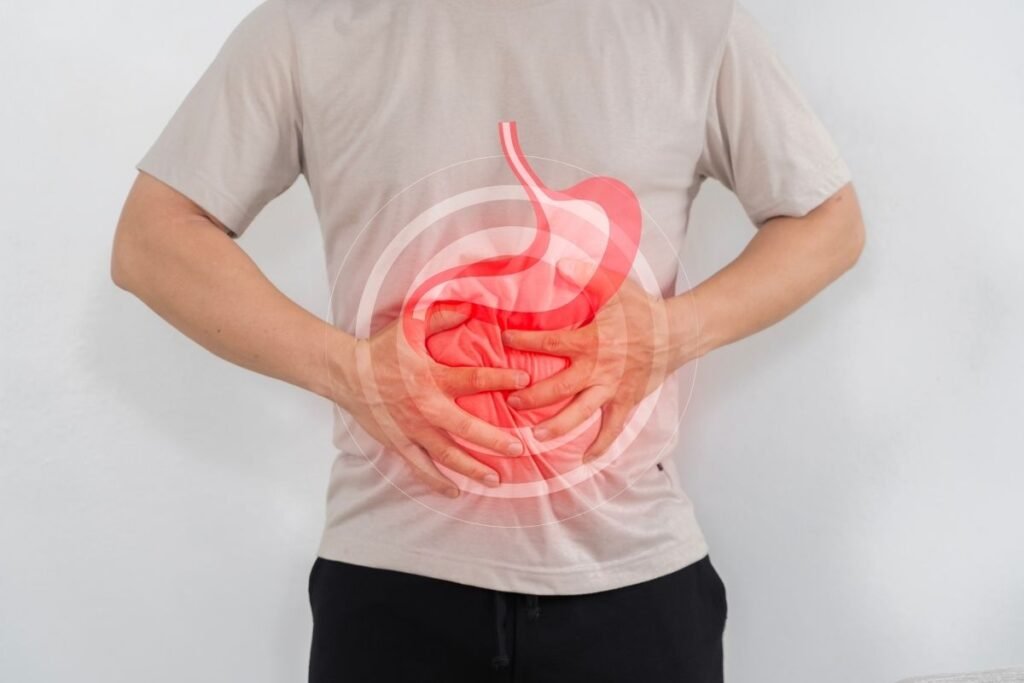
Quick Answer: The best tips to improve gut health are eating 30 g of fibre, 30 different plants a week, fermented foods, drinking water, walking, getting proper sleep, and managing stress.
- Over 1,000 species of bacteria, viruses and fungi live in your large intestine.
- UK adults should aim for 30g of fibre daily, but most fall short.
- Thirty different plants a week beats thirty servings of broccoli.
- Blood in your stool, or weight falling off? Ring the GP.
What Gut Health Actually Means
Your gut covers your stomach, intestines, and colon. They break food down, pull out what’s useful, and shove the rest towards the exit.
The bacteria in your gut make up your microbiome, and not all of them are on your side. Some microorganisms are harmful to our health, but many are beneficial and necessary for a healthy body. Not sterile — mixed. Better Health says it best: a higher level of diversity in gut bacteria is an important indicator of the health of your microbiome.
Research is showing us that our gut microbiome can affect every organ in our body. Hence, immunity, mental health, autoimmune conditions, type 2 diabetes, IBS, inflammatory bowel disease, heart disease, cancer, and sleep are all affected, with Harvard Health also adding psoriatic arthritis.
Signs Of An Unhealthy Gut
Wind, bloating, bunging up, running to the loo, or heartburn are some of the signs. It’s the others that catch people out: sleep that never works, tiredness that nothing fixes, mood on the floor, anxiety, and every bug going round the office.
Who’s to blame? Stress, late nights, sitting all day, ready meals, fags, booze, and antibiotics. Not all of it’s on you — genes, age, even whether you were breastfed.
Don’t diagnose yourself based on one rough week. Symptoms may suggest a digestive concern, but they can have many possible causes.
Tips To Improve Gut Health Through Your Diet
Get To 30 g of Fibre Daily
Fibre’s where everyone’s short. The NHS wants 30 g daily and admits most of Britain isn’t close. Wholemeal bread, brown rice, fruit, veg, beans, oats, nuts — soluble and insoluble, you want both.
Don’t inhale three tins of chickpeas on day one. Add one thing a week, with water, because fibre acts like a sponge, absorbing water, and without fluid the fibre cannot do its job, and you’ll get constipation.
Eat 30 Different Plants a Week
Thirty different ones. Aim for three colours on your plate, with something green most days.
Feed the Good Bacteria
Prebiotics are fertilisers for good bacteria, including leeks, onions, garlic, asparagus, chickpeas, lentils, rye bread, and barley. Spuds and rice cooked and then cooled, plus a green banana, add resistant starch. Start small, or you’ll be unbearable in a lift.
Add Fermented Foods
Yoghurt, kefir, kimchi, sauerkraut, sourdough, kombucha, miso, and tempeh. Turn the jar round: no “live and active cultures” means it’s pasteurised. Expensive cabbage.
Don’t Skip Polyphenols
Plant compounds that nourish your gut bugs and support your gut lining. Berries, beetroot, herbs, spices, nuts, seeds, tea, coffee, cocoa, and dark chocolate. Yes, chocolate.
Ease Off Ultra-Processed Food
Ham, salami, cereals, ready meals, puddings, crisps — hardly any fibre, but plenty of emulsifiers and artificial sweeteners. Sugar sneaks into things pretending to be healthy: smoothies, nut butter, protein bars, and flavoured yoghurt. Corn syrup on the label is the clue.
Fats split too. Saturated fat drags gut health back; omega-3 from oily fish and flaxseed hauls it forward. Grill instead of frying.
Drink Up and Slow Down
Water breaks food down, softens stools, and maybe boosts bacterial diversity. Four to six cups suits most people, and a glass with every meal is the laziest habit going. Then chew. Properly. Four or five smaller meals beat three enormous ones, and stop eating three hours before bed.
Foods That Trigger Trouble
Some foods just don’t like you. Chips, burgers, and anything deep-fried sit like cement and bring heartburn. Chillies, obviously — but garlic and onion too. Tomatoes, citrus, dressings and fizzy pop set off reflux. Wheat and onions stir up IBS. Lactose trouble? Milk, cheese and yoghurt cause wind and the runs.
Scribble a food diary for a fortnight, and the culprit turns up. Keep coffee and tea to two cups. Caffeine winds up stomach acid. With IBS, a short low-FODMAP stretch helps.
Lifestyle Changes Worth Trying
Walking and cycling physically push things along. UK guidance asks for 150 minutes of moderate movement weekly plus two strength sessions. A review in the journal Nutrients found that 150 to 270 minutes of exercise each week over six weeks shifted your microbiota, and this effect was even better when cardio and resistance work were combined.
Sleep’s next: seven to nine hours if you’re 18 to 64; seven to eight past 65. Work in Frontiers in Microbiology links certain gut bacteria to insomnia and sleep length.
Stress, though. Cortisol and adrenaline spike, and within hours they can lead to diarrhoea or constipation, stomach ache, and heartburn. After months of stress, your gut wall becomes leakier. Belly breathing, meditation, yoga, a walk outside — whatever works for you.
Three quick ones. Smoking slackens the muscle at the bottom of your food pipe so acid heads the wrong way and raises stomach cancer risk. Cap booze at 14 units weekly over three or more days. A bit of weight off can sort heartburn.
Probiotics, Antibiotics, and Gut Myths
Probiotics are strain-specific. The Canadian Digestive Health Foundation won’t stop saying it, because people keep buying whichever tub shouts loudest. Match the strain to your problem, give it four weeks, and check with your GP if you’re managing something. On antibiotics? Space them two to three hours apart, finish the course anyway, and don’t stockpile leftovers.
Bin the myths. There’s no scientific evidence that individual foods or any other product will rapidly heal an unbalanced gut microbiome. Colon cleansing has no proven benefit. Bacteria shift in days; real diversity takes months.
When To See a GP
Anything that won’t settle deserves an appointment. Blood in your stool, unexplained weight loss, or severe stomach pain — go now.
FAQs
- How can I improve my gut health quickly?
Ans: Water, more fibre, fermented food, and less stress. Days to feel better; weeks for your microbiome.
- What are the signs of an unhealthy gut?
Ans: Bloating, wind, constipation, diarrhoea, heartburn, tiredness, and a flat mood. None proves much alone. See a GP if it lingers.
- Does a seven-day gut reset work?
Ans: No. You’ll nudge things briefly, then they drift back. Months of decent habits win out.
- Do I need probiotic supplements?
Ans: Most healthy people don’t. Live yoghurt and kefir cover it unless your GP names one.
- How much fibre do UK adults need daily?
Ans: Thirty grams. We average 20 g, so we need to increase our intake.
- Can stress alone upset my gut?
Ans: Yes, easily. Stress hormones speed digestion up or stall it, causing bloating, pain, diarrhoea, and no change in diet.
Sources & References:
- Better Health – A higher level of diversity in gut bacteria is an important indicator of the health of your microbiome.
- Harvard Health – Our bad gut microbiome can cause psoriatic arthritis.
- NHS – Every adult should take 30 g daily, and it admits most of Britain isn’t close.
- CDHF – People keep buying probiotics, whichever tub shouts loudest.


Leave a Reply