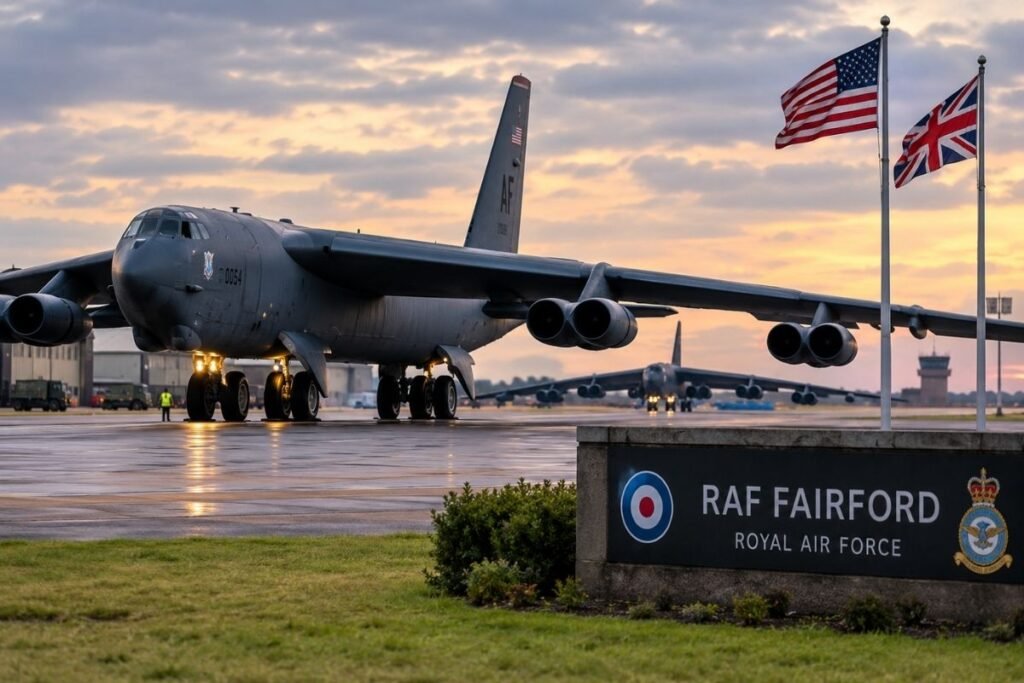
Quick Answer: The United States has removed every bomber from RAF Fairford in Gloucestershire. Twelve B-1s flew home on Sunday, 4 October, after commanders received warnings about an Iran-backed plot against the base. The Pentagon says its global strike power remains untouched.
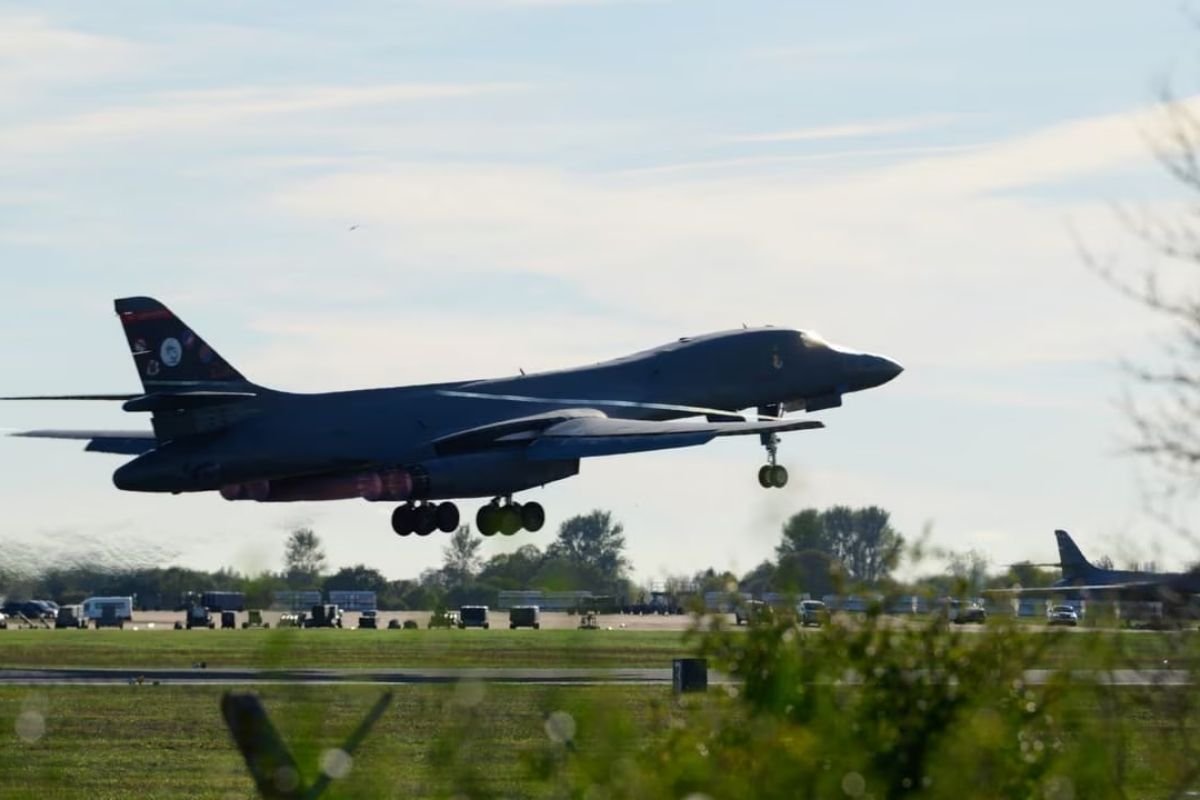
US bombers withdraw from RAF Fairford only rarely and never this fast. Some crews lifted off while tankers were still being scrambled to meet them. By Sunday evening, the hardstands that held America’s bomber force in Europe sat empty.
- All US bombers have left Fairford for home stations in America.
- Twelve B-1B Lancers were based there; at least ten left on 4 October.
- Three landed in South Dakota by Sunday evening.
- It follows a suspected terror plot near the base on 27 September.
- Six people were arrested, then bailed. Iran denies involvement.
- The Ministry of Defence will not comment.
What Happened at RAF Fairford on 27 September
In the early hours of 27 September, police were alerted to three suspicious vehicles heading for the Gloucestershire base. The white vans held no explosives, though officers recovered a quantity of fuel.
Five men aged 23 to 25, all UK nationals from London, were detained near Welford. They were held over explosives offences, then for preparing a terrorist act, before being bailed. Counter Terrorism Policing described the action as an “investigative decision” that was “grounded in experience and strategy”.
The arrests followed a tip-off from one of the group members himself. A sixth suspect, a dual British-Iranian national, was held in London on 1 October over preparing terrorist acts, then bailed two days later.
Also Read – A66 Crash: IOPC Rules Out Police Tactical Contact Claims
Why US Bombers Withdraw From RAF Fairford
The trigger was new intelligence. Reporting in the New York Times, commanders received threats about an Iran-backed plot against the installation. One official said it formed part of the same picture that surfaced three weeks earlier, but that details and urgency spiked in the final 24 hours. Several aircraft had arrived days earlier on a routine rotation.
A branch of the Islamic Revolutionary Guard Corps recruited UK nationals for the plot, which involved several steps, including a diversion nearby, the Wall Street Journal has reported.
The BBC has been told the withdrawal was a military decision, not a political one, taken at the operational level. Whitehall sources have not disputed that Washington acted over the incident.
What the Pentagon Said
A Pentagon spokesperson said, “While operational security precluded us from confirming the movement of our assets and forces in real-time, we can acknowledge now that all US bombers that were deployed to RAF Fairford have redeployed to their home stations in the United States.”
It added that bomber crews “remain ready to deliver precision global strike capabilities – including through operations that launch and recover from the continental United States – anywhere, anytime.” Militarnyi noted that US European Command confirmed the return.
Also Read – Steve Heapy Jet2 Statement: CEO Calls for Urgent Action After Latest NATS Failure
The B-1 Bomber and What Its Exit Costs
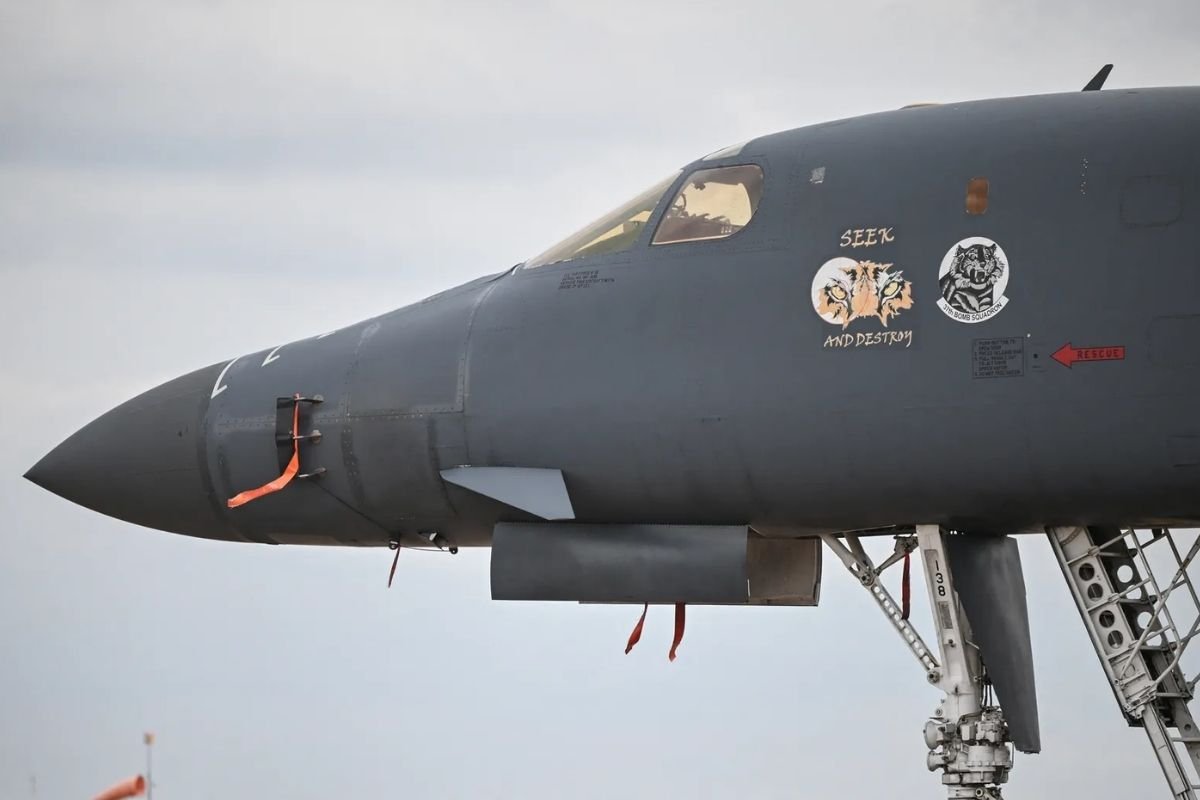
The B-1 bomber is a swing-wing, supersonic aircraft with the largest conventional payload in the American inventory. Many flown from Britain carried precision-guided “bunker-busting” bombs, built with thicker casings to punch into hardened or buried targets such as weapons stores. Each mission ran roughly 12 to 15 hours there and back, with air refuelling both ways.
Fairford’s long runway made that tempo possible. The base hosts the US 501st Combat Support Wing and is “the preferred bomber forward operating location in Europe for US Air Force Global Strike Command”.
Sky News defence and security editor Deborah Haynes said Washington would “not have taken the decision lightly”, adding: “Clearly there is still a threat ongoing around the base.”
Politics, Pressure, and the Wider War
Prime Minister Andy Burnham said on 30 September there were “strong indications” that Iran had played a part. Tehran denies it. Defence Secretary Wes Streeting said, “We’re exploring with our police and security services a range of leads and possibilities, but as our prime minister has stated, it is likely that Iran was responsible.” No formal attribution has been made.
Donald Trump attacked the bail decision. “We know everything about them; we would not have released them,” he said. On Iranian involvement, he said, “It’s looking like that,” short of confirmation.
The war began on 28 February, when the US and Israel struck Iran. Sir Keir Starmer then allowed American “defensive” strikes from British bases, a policy Burnham kept. The first bomber landed at Fairford in March 2026. B-1Bs hit missile sites on 2 March and IRGC facilities on 22 July.
The build-up was so large that the Royal International Air Tattoo 2026 was cancelled. In July, Iran warned that “any base used for aggression against Iranian territory constitutes a legitimate target for our forces”.
Also Read – How Much the Iran–Israel Conflict Is Really Costing: The $3 Trillion Bill
American firepower in the region is still growing. The Guardian reports that the carrier USS Theodore Roosevelt and the USS Makin Island readiness group are heading that way, which could put three carriers there by late October.
Fairford stands without bombers for the first time since the war began. British defence officials want stronger protection around military sites, including the use of drones. US F-35 and F-15E jets remain at RAF Lakenheath on raised alert, with tankers at RAF Mildenhall. The Gloucestershire runway is ready. The aircraft are 4,000 miles away.
FAQs
- Why did the US withdraw its bombers from RAF Fairford?
Ans: Commanders received fresh warnings of an Iran-backed plot against the base. The threat was urgent enough to fly them home within hours.
- How many bombers left RAF Fairford?
Ans: Twelve B-1B Lancers were stationed there, and at least ten flew out on 4 October. The Pentagon confirms all have gone.
- Where did the B-1 bombers go?
Ans: They returned to their home stations in the United States. Three landed in South Dakota by Sunday evening.
- What happened at RAF Fairford on 27 September?
Ans: Police were alerted to three vans heading for the base. Five men were arrested on terror and explosives offences. No explosives were found, but fuel was.
- Was Iran behind the RAF Fairford plot?
Ans: The Prime Minister cites “strong indications” of Iranian involvement and the Defence Secretary says Iran was likely responsible. Tehran denies it.
- Can the US still strike Iran without RAF Fairford?
Ans: Yes. B-1s, B-2s and B-52s fly long-range missions straight from the United States. Losing Fairford costs flying time and a European foothold.
Sources & References:
- Sky News – Washington would not have taken the decision lightly.
- BBC – The withdrawal was a military decision, not a political one, taken at the operational level.
- MILITARYNYI – The US European Command confirmed the return.
- NY Times – Commanders received threats about an Iran-backed plot against the installation.



Leave a Reply