
Sitting at a desk all day can ruin your posture, muscles, circulation, metabolism, sight, and energy levels. Sitting at a desk isn’t always a terrible thing, but sitting for long periods of time without moving about can lead to back and neck pain, tight hips, poor posture, restricted blood flow, and other health problems.
If you’re working from home or sitting at a desk most of the day in the office, simple movement breaks can do wonders.
What Happens to Your Body When You Sit All Day?
Sit for hours, and your body settles into it. Muscles use less energy. Hips and legs stay bent the whole time. Posture caves in slowly enough that most people don’t notice until someone else mentions it, or their back just starts hurting out of nowhere.
Leaning toward the screen loads up your neck and shoulders and lower back; that’s a big one. Hip flexors stay shortened for as long as you’re seated, and over time that turns into actual stiffness. Glutes barely activate while you sit, so they weaken without you doing anything wrong, just from inactivity. Circulation slows in your legs. Eyes dry out from staring at a screen too long without a break. Energy dips. And prolonged sitting has been linked to worse metabolic health in general, not something you feel day to day, but it’s there.
Is Sitting at a Desk All Day Bad for You?
Depends on the day, honestly. Sitting itself isn’t the problem; it’s staying inactive for long, uninterrupted stretches that causes issues. Someone could run five miles every morning and still deal with these effects if they then sit nine hours straight with zero breaks. Fitness outside work doesn’t cancel out hours of stillness during it.
How Does Sitting All Day Affect Your Back?
Sitting for extended periods can contribute to lower back pain and stiffness, particularly when your chair, desk, or monitor is poorly positioned.
Common contributors include:
- Slouching toward the computer.
- Sitting without adequate lower-back support.
- Keeping the head pushed forward toward the screen.
- Staying in the same position for hours.
- Not taking regular movement breaks.
A well-adjusted workstation can help reduce unnecessary strain, but changing positions and moving regularly are also important.
How Does Sitting Affect Your Posture?
Give it enough hours, and your body drifts on its own. Head creeps forward. Shoulders roll in. Upper back rounds out. It happens slowly enough that people usually catch it by accident, like seeing themselves in a window reflection and thinking, when did I start slouching like that.
A few adjustments slow it down.
- Monitor around eye level.
- Feet flat, supported, not dangling.
- Keyboard and mouse close enough that your shoulders can actually relax instead of hunching forward to reach.
- Real lower back support, not just a flat panel you’re leaning against.
- Skip tilting your head down at a laptop for hours at a stretch.
- And just change position throughout the day instead of locking into one spot.
What Happens to Your Legs When You Sit for Too Long?
When you sit for a long time, the muscles in your legs are less active and blood circulation can become less efficient.
You may notice:
- Stiffness in your knees or hips
- Tight calves
- Heavy or tired legs
- Temporary swelling around the ankles
- Numbness or tingling from staying in one position
Getting up regularly, walking around, or performing gentle leg movements can help keep your body active during the workday.
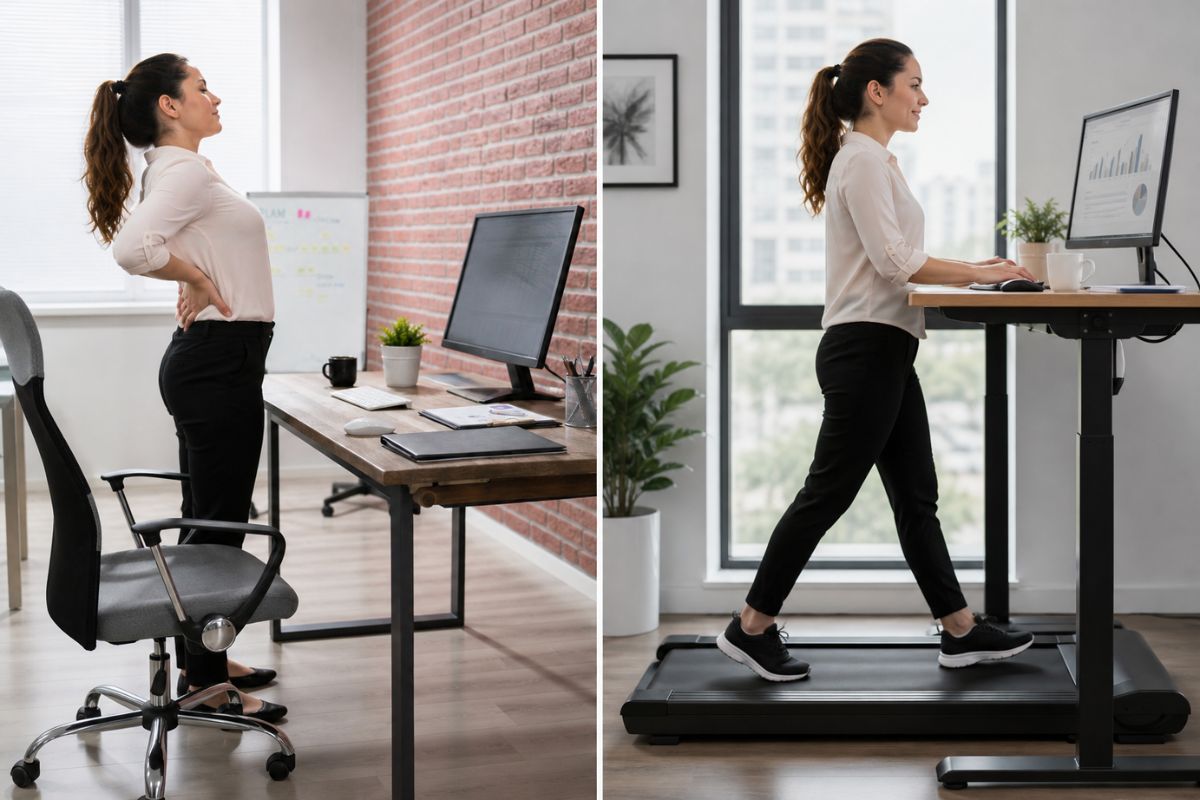
Does Sitting All Day Cause Weight Gain?
Sitting itself does not automatically cause weight gain. But sitting for hours uses a lot less energy than standing or walking around would, and that difference really mounts up over a week without you recognizing it. Add a sedentary job, miss the exercise, and consume more than your body actually needs, and yep, weight gain follows eventually. It’s not just the sitting; it’s the mix.
Walking more, standing when you can, doing chores, taking movement breaks, all of it helps close the gap.
How Does Sitting All Day Affect Your Eyes?
If your work involves staring at a computer screen for hours, you may experience digital eye strain.
Symptoms can include:
- Dry eyes
- Fuzzy vision
- Headaches
- Difficulty concentrating
- Eye fatigue
Most of it is staring too long, not blinking enough, or looking somewhere else.
Take your eyes off the screen once in a while. Blink on purpose; it sounds stupid, yet people forget to. Turn the brightness down if it’s too bright. Make sure the room illumination isn’t making you squint at the screen all day.
How Often Should You Get Up From Your Desk?
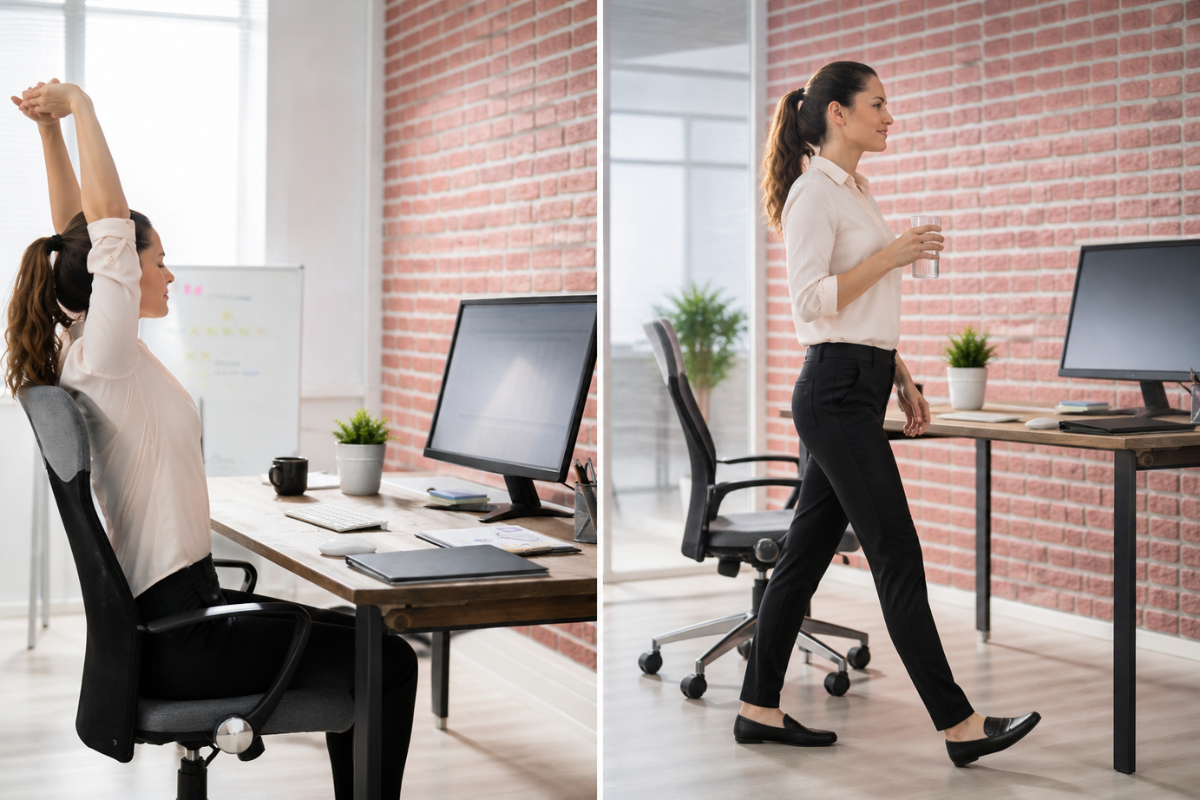
There is no single perfect schedule for everyone. What actually matters is breaking up long sitting stretches with something; it doesn’t need to be much.
Try making movement part of your normal work routine:
- Stand during phone calls.
- Walk during breaks instead of scrolling at your desk.
- Stretch between tasks.
- Get water more often than feels necessary.
- Use stairs when practical.
- Walk at lunch.
- Switch between sitting and standing if your setup allows it.
None of that needs to be a whole routine. Just don’t stay glued to one spot the entire day.
What Are the Best Exercises for People Who Sit All Day?
People who work at a desk can benefit from exercises that strengthen the body and counter common areas of stiffness.
Useful options include:
- Walking
- Squats
- Glute bridges
- Lunges
- Calf raises
- Chest-opening stretches
- Hip-flexor stretches
- Gentle upper-back mobility exercises
- Core-strengthening exercises
Even a few minutes of movement at a time can be easier to maintain than waiting until the end of the day for one long workout.
How Can You Stay Healthy If You Have a Desk Job?
Stop chasing the perfect posture. It’s not realistic to find one ideal position and hold it for eight hours. Moving more often beats that every time.
A rough pattern works fine:
Sit → work → stand → move → stretch → return to work → repeat.
You can also:
- Set reminders if that helps.
- Take real walking breaks, not just a trip to the coffee machine and straight back.
- Set your chair and monitor up properly once, then stop fiddling with them.
- Eat at least one meal away from your desk.
- Find some activity outside work hours.
- Keep changing position through the day rather than locking in from nine to five.
Desk Job Health Tips for Office Workers in the UK
Long screen-based workdays can be easy to miss for those working in offices or from home across the UK, including major hubs such as London, Manchester, Birmingham, Leeds, Bristol, Edinburgh and Glasgow.
Easy behaviors that can be squeezed into a normal UK workday:
- Go for walks during tea or coffee breaks.
- Go for a little walk after lunch.
- During appropriate meetings or calls, stand.
- Take steps rather than lifts where practical.
- Instead of continually driving or messaging, walk to neighboring shops or colleagues.
- Don’t spend your entire lunch break sitting at your workstation.
- Take a short walk in the evening after work.
These practices are particularly beneficial if your day includes a lengthy journey, whether by rail, tube, or automobile, followed by several hours of computer work.
Frequently Asked Questions
Is it unhealthy to sit for 8 hours a day?
Sitting that long without breaks carries real risk. If your job keeps you at a desk around eight hours, break it up with standing, walking, and stretching whenever you reasonably can.
How long is too long to sit at a desk?
There is no universal cutoff that makes sitting suddenly become harmful. The key principle is to avoid prolonged, uninterrupted sitting and incorporate movement throughout the day.
Can sitting all day cause back pain?
Yes, particularly when paired with bad chair setup or slouched posture held for long stretches.
Does standing at a desk all day fix the problem?
Not really, no. Standing all day just swaps one static position for another. Switching between sitting, standing, and walking beats committing fully to either.
What is the best way to counteract sitting all day?
A mix, honestly: movement breaks, regular exercise, strength training, walking, a workstation set up properly. No single fix does it alone.
Is a 10-minute walk after sitting all day helpful?
Yes. It breaks up the sedentary stretch and adds activity. Longer or more frequent walks help even more.
The Bottom Line
Sitting at a desk all day will make your body stiff and tired out, and it’s not the chair, it’s the sitting. A fancy chair will not do what only movement can do.
Change your setup, change position often, stand when you can, walk when you can, stretch, stay active after you are done working.
If you experience discomfort, numbness or swelling that persists or worsens, don’t assume it’s merely a function of sitting too long. Have it checked out by a doctor.
Sources & References
- WHO Guidelines on Physical Activity and Sedentary Behaviour
- WHO Physical Activity Fact Sheet
- NIH: Tired, Achy Eyes?
- PubMed: Digital Screen Use and Dry Eye
- PubMed: Digital Eye Strain — A Comprehensive Review
Medical Disclaimer
This article is intended for general educational and informational purposes only. It should not be considered medical advice, diagnosis, or treatment. If you have persistent back or neck pain, numbness, swelling, vision problems, or other concerning symptoms, consult a qualified healthcare professional.




Leave a Reply