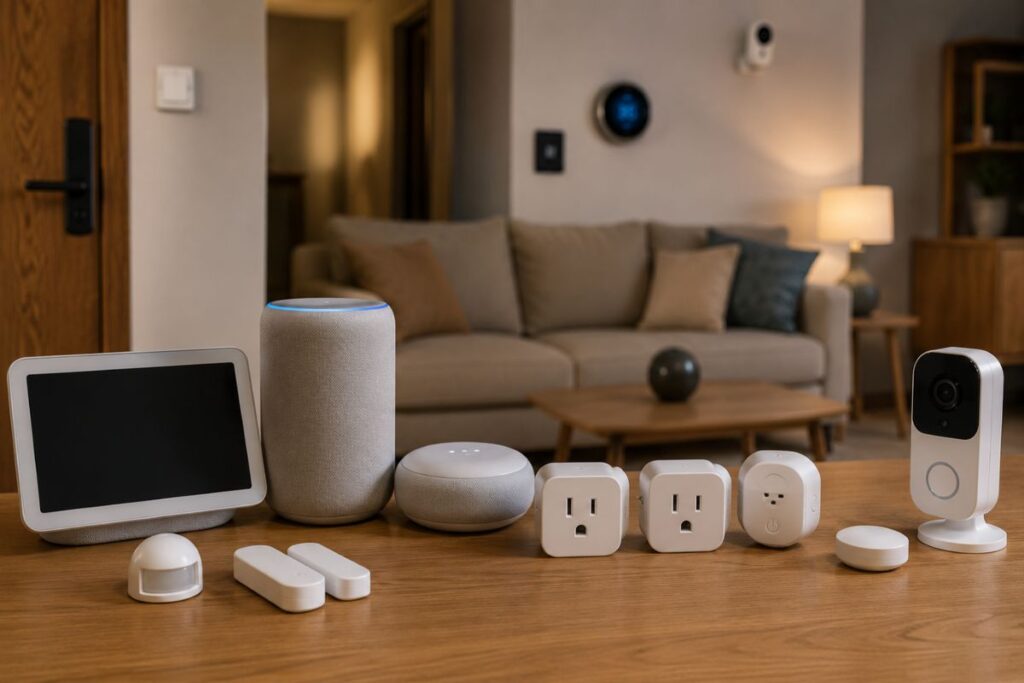
Always start small. A smart speaker, two or three smart plugs and a video doorbell will change your day more than a full automation system ever will. Lighting, heating and a leak sensor come next. These devices don’t need rewiring and take an afternoon to set up. A decade ago these appliances belonged in films. Now your mum has an Alexa in the kitchen. The smart home devices worth buying are the ones you use daily, not the ones with the longest spec sheet.
- Smart speakers are the best sellers at 35% ownership in Britain.
- Plugs and bulbs cost under £20 and need no tools.
- Zigbee, Z-Wave and Matter are more reliable than Wi-Fi-only kits.
- Leak and smoke sensors have cheap insurance against pricey damage.
- Price puts most people off: 35% say smart appliances cost too much.
The Smart Devices Hub
Vesternet makes a fair point. A proper smart device hub means one app instead of six, and Z-Wave or Zigbee builds a mesh that gets stronger with every device you add. Hubitat and Home Assistant suit fiddlers. An Echo Show does the job for everyone else.
Smart Plugs
Bung one between the socket and a lamp, fan or coffee machine, and it suddenly becomes smart. Off on holiday? Set two lamps to switch on at odd times so the place looks lived in. PCMag rates the TP-Link Tapo P110M and the Shelly Plug Gen4, both with energy monitoring, so you can spot which appliance is eating your money.
Smart Speakers and Displays
Echo, Google Nest and Apple HomePod take voice commands and control everything else. Very’s guide sums up to saying, “Show me the front door”, and your doorbell feed pops up on the screen. They also read bedtime stories, play music and give you the football scores.
Smart Lighting
Three ways to do it. Bulbs like Philips Hue give you millions of colours through a Hue Bridge, indoors and out, but they die if someone flicks the wall switch. Switches and dimmers keep normal control for guests and work with your existing fittings, though many need a neutral wire.
Smart Heating
Hive lets you control the boiler from your phone or shout at Alexa when your hands are full. Geofencing warms the house as you get near it, and sensors stop you heating empty rooms. Most systems need a pro to fit them, so budget for that.
Video Doorbells
You’re at your desk, the courier’s at your door, and you tell them to leave it on the porch. The second-generation Arlo doorbell does sharp video without wiring.
Security Cameras
Cameras cover the hallway, the garden, and, to be honest, the dog. The Ring Alarm bundle gives you a base station, keypad, door sensor, motion detector, range extender and indoor camera in one box.
Smart Locks
Give the cleaner or a guest temporary access from your phone, then take it away. The Ultraloq U-Bolt Pro opens by fingerprint, keypad, app, voice or a normal key.
Motion Sensors
Lights come on when you walk in and off when you leave. Many also read temperature and light levels, so your system knows more with no extra kit.
Door and Window Sensors
They’re just two small bits of plastic, stuck on with pads. No drilling, so renters are fine. They tell you when a door opens, turn the heating down when a window is left ajar, and ping you when the kids get home.
Temperature and Humidity Sensors
One thermostat cannot see the whole house. Pop these in the bathroom, loft or cellar, and you will spot damp before mould shows up. They’re also useful if you keep wine or a guitar somewhere that swings hot and cold.
Water Leak Sensors
Put them under the sink, behind the washing machine, by the boiler and near the dishwasher. Pair them with a smart valve and the mains shuts off on its own. A tenner now beats a ruined kitchen floor later.
Smart Smoke and CO Alarms
They message your phone when you are out, and if one sounds, they all sound. Some shut off the heating in a fire or switch the lights on so you can get out. No more 2am chirping either, since you get a warning before the battery dies. Got decent alarms already? A listener device hears them and sends the alert for you.
Robot Vacuums
Ecovacs explains it well. LIDAR maps your rooms so the DEEBOT knows where the sofa is, sticks to no-go zones and empties itself into its dock. Pet mode ramps up suction for hair. The X8 Pro Omni and the Roomba j9+ sit at the top end.
Smart Tags
A four-pack of Apple AirTags stops the daily key hunt. One tap pairs them to your iPhone, a speaker chirps when you are close, and Siri finds your gym bag. Lost Mode tells you when someone else spots it. The battery lasts over a year.
Scene Controllers
A wall button by the door running “Arriving Home” or “Movie Night” saves unlocking your phone, and guests can use it without an app.
What Britons Actually Own
YouGov Profiles data states that smart meters top the list at 39%, but suppliers fit those. Of what people choose themselves, speakers lead at 35%, followed by security cameras (18%), thermostats (14%) and lighting (12%). Washing machines sit at 8%, fridges and dishwashers at 3%. Nine in ten say they have heard of smart appliances, yet only 24% reckon they know much about them. The worries are predictable: cost (35%), losing everything when the internet drops (33%), privacy (31%) and hacking (28%).
Wi-Fi, Zigbee, Z-Wave or Matter?
A Wi-Fi kit needs no hub but clutters your router and leaves you with an app per brand. Zigbee and Z-Wave mesh networks sip battery and rarely drop out. Matter is meant to make brands play nicely, though the industry admits it is not quite there yet.
FAQs
What should I buy first?
Ans: A smart plug or a speaker. Both are cheap, need no wiring, and show you within a week if you like living this way.
Do I need a hub?
Ans: Not at first. Past five or six devices, a hub gives you one app, faster response and fewer dropouts.
Do smart devices save money?
Ans: Yes, thermostats and energy-monitoring plugs save money by cutting waste. Bulbs and speakers mostly buy convenience, not savings.
Can renters use them?
Ans: Yes. Plugs, bulbs, speakers, cameras and stick-on sensors leave no marks. Ask the landlord before touching switches or the boiler.
Are they easy to hack?
Ans: Not if you are sensible. Strong passwords, two-factor login and regular updates handle most of the risk.
What does ‘matter’ mean?
Ans: It is a shared standard, so kits from different brands work across Alexa, Google Home and Apple Home without fuss.
Sources & References:
- Vesternet – A proper hub means one app instead of six, and Z-Wave or Zigbee builds a mesh that gets stronger with every device you add.
- Very – Smart speakers and displays read bedtime stories, play music and give you the football scores.
- YouGov – 39% of Britons have smart meters in their homes.
- Ecovacs – A robot vacuum like LIDAR maps your rooms so the DEEBOT knows where the sofa is, sticks to no-go zones and empties itself into its dock.



Leave a Reply